UK Signage Trends 2026: Where Dimensional & Illuminated Signs Are Heading
Published Updated
Signage never stands still. Every year brings shifts in what clients want, what technology makes possible, and what the market rewards – and 2026 is proving to be a pivotal one for dimensional and illuminated signs.
Digital displays get most of the headlines, but physical, three-dimensional signage isn’t just holding its ground; in several ways it’s being reinvented. Here are the trends shaping the year, and what they mean for UK sign makers.
1. Dimensional beats flat: the return of depth
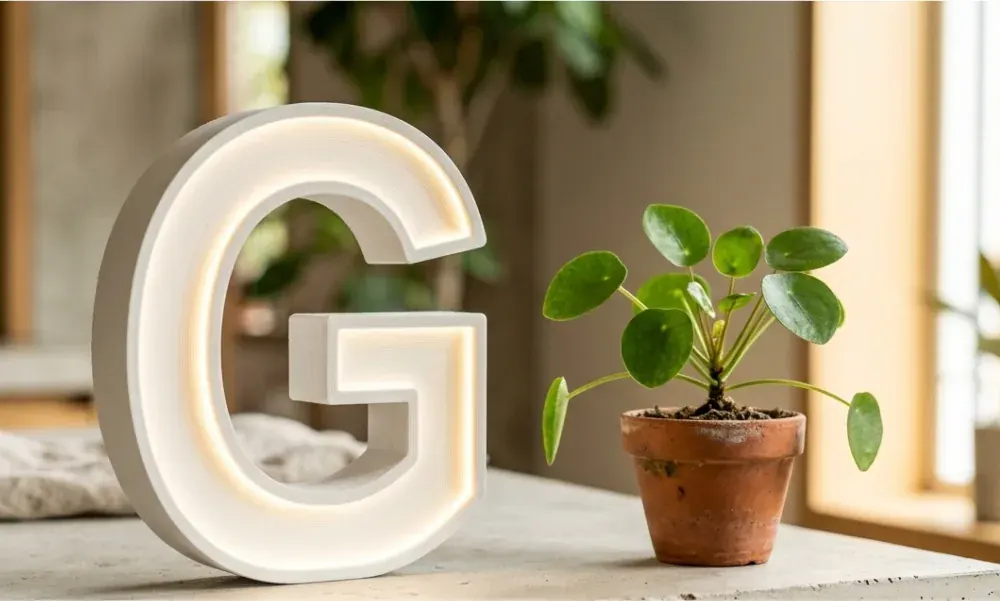
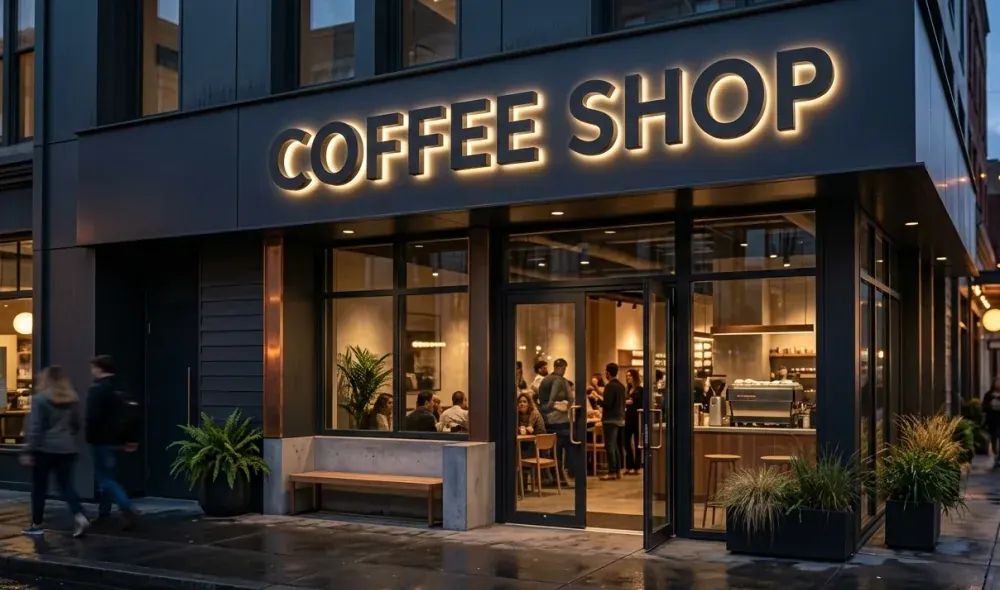
The clearest trend of 2026 is a decisive move away from flat signage toward depth, texture and dimension. On a busy high street, a flat vinyl sign gets lost in the visual noise; a three-dimensional letter catches the light at different angles throughout the day and passes what some in the trade call the “sidewalk test”. Dimensional lettering, layered panels and RGB-lit channel letters are increasingly the default for brands that want to be noticed, not overlooked.
This is exactly where 3D printing has changed the economics. Producing dimensional letters used to mean hours of skilled fabrication; now they can be printed in-house, overnight, at a fraction of the cost – which is why dimensional signage is becoming accessible to a much wider range of businesses. Our post on 3D-printed shopfront and retail signage looks at how that plays out on the high street.
2. Sustainability is now a requirement, not a bonus
For years, “eco-friendly” was a nice-to-have. In 2026 it’s a baseline expectation. Businesses – particularly larger brands with environmental commitments – increasingly want signage produced with recyclable materials, energy-efficient lighting and low waste, and they’re choosing suppliers accordingly.
This favours production methods that are lean by design. Additive 3D printing produces far less material waste than cutting and routing, uses very little energy, and – produced locally – cuts transport emissions. We explore this in depth in our guide to sustainable signage. Sign makers who can offer a credibly greener option have a real advantage in 2026.
3. Smarter, more efficient lighting
LED has become the standard, and 2026 is pushing it further. Two things stand out: efficiency and control. On efficiency, businesses want bright, consistent illumination without inflating energy bills, and many are retrofitting older fluorescent or neon cabinets with modern LED modules. On control, there’s growing appetite for programmable and RGB systems that allow subtle colour shifts, dimming schedules and brand-specific effects.
Alongside the tech, the aesthetic of lighting is maturing. Rather than maximum brightness, 2026 favours controlled, atmospheric illumination – halo-lit and edge-lit styles that guide the eye and read as premium, especially at close range. Getting these effects right is a craft in itself, as our guide to lighting channel letters explains.
4. Confident minimalism and bold typography
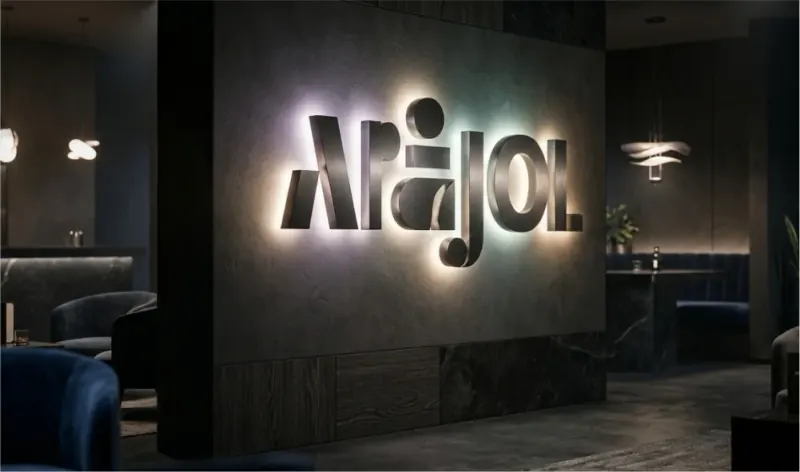
Signage design in 2026 is leaning into confident minimalism: fewer words, high contrast, and generous space, paired with high-quality materials rather than decoration. Typography is doing more of the work – bold sans-serifs and custom typefaces that communicate personality before the message is even read, with careful attention to weight, scale and letter spacing.
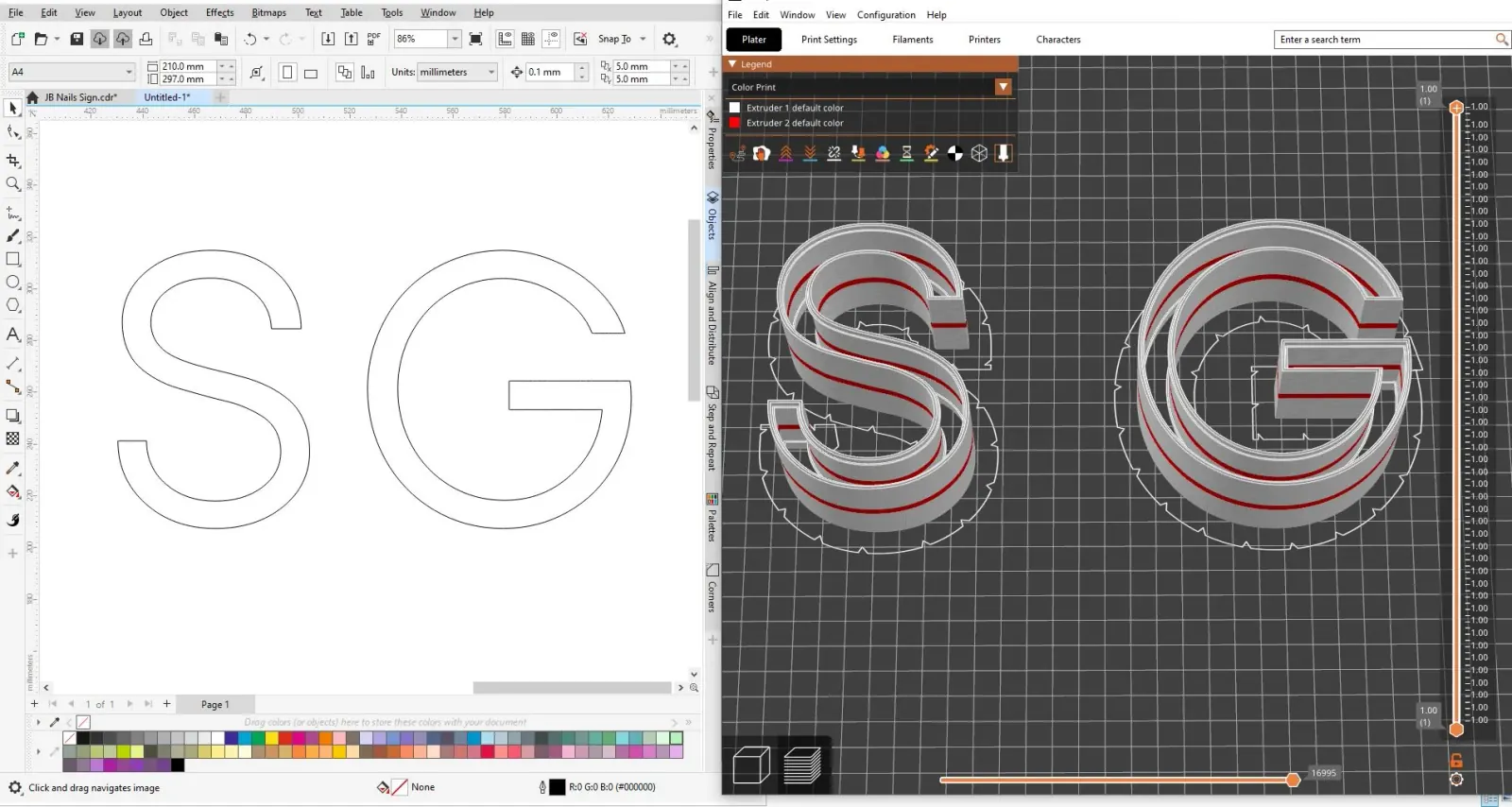
This plays to a strength of 3D printing: because letters are generated from vector artwork, an ornate custom typeface or a bold bespoke logo prints the same way as a plain block letter, with no “complexity penalty” for detailed shapes. Brands no longer have to compromise their identity to keep fabrication affordable.
5. Durability and total cost of ownership
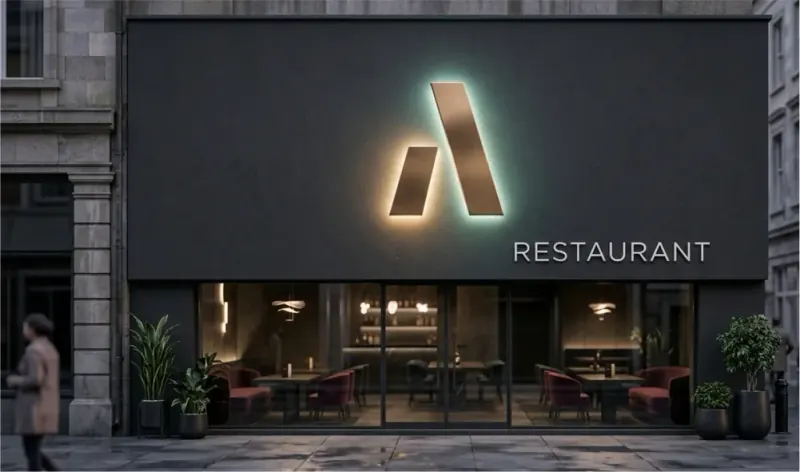
Buyers in 2026 are increasingly treating signage as long-term infrastructure, not a one-off purchase. The wrong material outdoors can fade, yellow or warp within a couple of years, so there’s a sharper focus on UV-resistant, weatherproof materials and on the total cost of ownership over a sign’s life. A sign that lasts is cheaper – and greener – than one that’s remade every few years.
This is where purpose-made signage materials earn their place. HFPC, for example, is engineered for outdoor illuminated signage with weather and UV resistance, so letters keep their appearance for years, as we set out in our guide to whether 3D-printed signs are weatherproof.
6. Production comes in-house – and gets automated
A significant operational shift is underway: sign shops are increasingly moving toward a one-stop model, managing design, fabrication, finishing and installation under one roof rather than outsourcing. Two forces are driving it – the desire for control and margin, and the automation that now makes in-house production practical without adding headcount.
Affordable industrial 3D printers are central to this. A modern channel-letter printer runs largely automated and unattended, letting one operator produce dimensional signage overnight – so bringing production in-house is no longer the leap it once was. As our in-house vs outsourcing guide shows, the economics increasingly favour making rather than buying. Expect AI-assisted design and rendering to speed up the front end of the process too.
7. Personalisation and on-demand speed
Finally, clients increasingly expect bespoke, personalised signage delivered quickly. Fit-outs run to tight deadlines, brands want signage tailored precisely to their identity, and there’s little appetite for long lead times. On-demand digital production – where each piece is made to order from a file, with no tooling or minimum run – suits this perfectly, which is a big part of why 3D-printed signage is gaining ground. Our workflow guide shows how quickly a design becomes a finished, installed sign.
What it means for UK sign makers
Step back, and the trends point in one direction. The signage the market rewards in 2026 is dimensional, sustainably produced, efficiently lit, built to last, and increasingly made in-house, on demand. Those aren’t separate trends so much as facets of the same shift – toward signage that’s higher quality, lower impact and more responsive.
3D printing sits squarely at that intersection: it makes dimensional signage affordable, it’s lean and low-energy, it works with durable signage materials, and it brings fast, on-demand production in-house. For sign makers, the opportunity in 2026 is to align with where the market is heading rather than defend where it’s been.
Frequently asked questions
What are the big signage trends for 2026? Dimensional (3D) lettering over flat signs, sustainability as a baseline expectation, energy-efficient and programmable LED lighting, confident minimalism with bold typography, a focus on durability and total cost of ownership, and production moving in-house with automation.
Is dimensional signage still relevant when digital is growing? Yes. Digital signage is growing, but physical dimensional and illuminated signage remains a strong, high-impact way for businesses to be seen – and in 2026 the two are increasingly used together rather than one replacing the other.
What’s the trend in sign lighting for 2026? Efficiency and control: LED as standard (including retrofits of older systems), more programmable and RGB lighting, and a shift toward controlled, atmospheric halo-lit and edge-lit styles rather than maximum brightness.
How is sustainability affecting signage? It’s now an expectation rather than a bonus. Clients increasingly want recyclable materials, energy-efficient lighting and low-waste production, which favours lean methods like additive 3D printing.
Stay ahead of where signage is heading
Want to keep up with the trends and see what modern dimensional signage can do for your business? Join our newsletter for updates, or book a demo – call us on +44 203 620 1605. To see how in-house production stacks up, start with our ROI breakdown.