Are 3D-Printed Signs Weatherproof? Outdoor Durability & UV Resistance
Published Updated
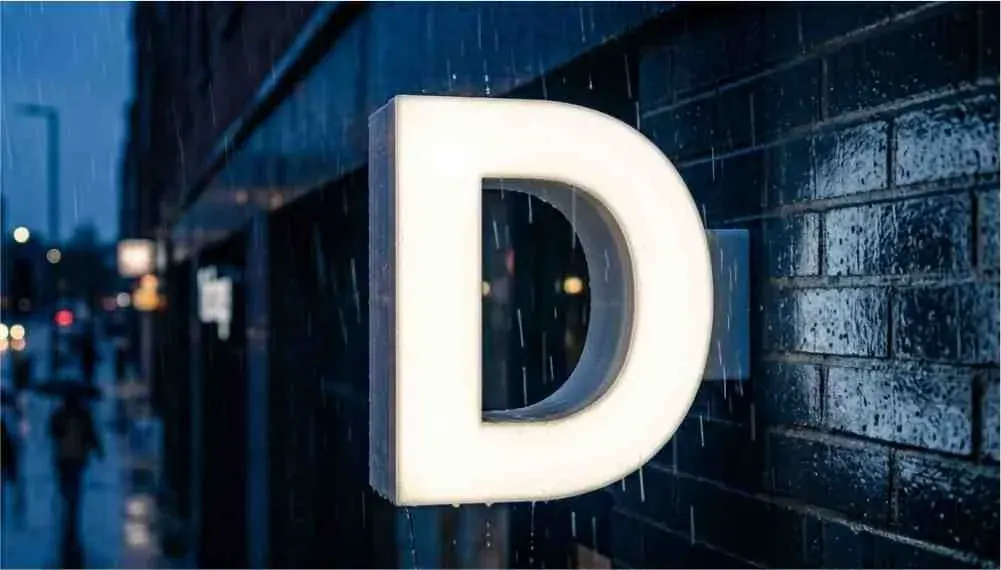
It’s the question almost every sign maker and client asks before committing to 3D-printed signage: won’t a 3D-printed sign melt, fade or fall apart outdoors?
It’s a fair concern – and the honest answer is that durability comes down to two things: the material you use and how well the sign is built.
Get those right, and a 3D-printed channel-letter sign stands up to the British weather for years. Here’s what actually determines whether a 3D-printed sign is weatherproof.
Where the concern comes from
The worry is rooted in hobby 3D printing. Most people’s mental image of 3D printing is desktop PLA – the cheap, easy filament used for trinkets and prototypes.
PLA is genuinely poor outdoors: it softens at relatively low temperatures, becomes brittle, and degrades in sunlight. A sign made from hobby PLA really would struggle on a sunny shopfront.
But professional signage isn’t made from hobby PLA. It’s made from materials engineered specifically for outdoor, illuminated use – and that changes everything. Judging 3D-printed signage by desktop PLA is like judging all paint by a child’s poster paints.
What actually determines outdoor durability
Whether a 3D-printed sign is weatherproof depends on a handful of factors:
- Material choice – by far the biggest factor. The polymer has to resist heat, UV and moisture.
- Temperature resistance – the sign must not soften or distort in summer sun or trapped heat.
- UV resistance – it must resist fading and yellowing over years of daylight.
- Water resistance and sealing – faces and seams need to keep water out, and water that does get in needs somewhere to go.
- Build quality – sound layer adhesion and sensible wall thickness make a tough, watertight part.
- Lighting protection – the LEDs and power supply need to be properly rated for the environment.
Nail these and the result is a sign that performs outdoors just like a traditionally fabricated one.
HFPC: a material made for outdoor signage
This is why SG 3D Printers signs are produced in HFPC – a modified polycarbonate-and-PETG blend developed specifically for illuminated channel letters and signage, not for hobby printing. It’s engineered to do the job a sign needs to do:
- Temperature resistant, rated for roughly –40°C to 65°C – comfortably covering UK outdoor conditions.
- UV resistant, formulated to resist fading and yellowing outdoors.
- Tough and impact resistant, thanks to its polycarbonate base.
- Excellent light diffusion, so illuminated faces glow evenly without hotspots – the property that makes it ideal for lit signage specifically.
In other words, weather resistance is designed into the material from the start. You can explore HFPC and the other signage filaments in our shop.

Temperature: will it warp in the sun?
This is the most common specific worry, and it’s where material choice matters most. Hobby PLA can soften and sag in a hot, sun-baked sign. A polycarbonate-based material like HFPC has far higher heat resistance.
With a rated range up to around 65°C, HFPC comfortably handles UK ambient temperatures – even our hottest summer days rarely approach that, and HFPC’s range gives sensible headroom for a sign face in direct sun.
As with any sign, good design helps: avoiding trapped heat and choosing appropriate face colours keeps letters well within their working range.
UV and fading
Every outdoor sign faces years of sunlight, and UV is what fades colours and degrades cheaper plastics over time.
It’s worth being honest here: all sign materials age – traditional acrylic faces can yellow over the years too.
The point isn’t that 3D-printed signage is immune; it’s that signage-grade HFPC is formulated specifically to resist UV fading and discolouration, so it holds its appearance over a normal sign lifespan rather than degrading quickly the way hobby filament would.
Water and weather
Rain is less of a problem than people expect, provided the sign is built properly:
- Watertight faces and seams keep the bulk of the water out.
- Drainage – small weep points let any condensation or ingress escape rather than pooling inside the letter.
- IP-rated lighting – using outdoor-rated LED modules and a suitable power supply is essential, and it’s where a lot of cheap outdoor signs actually fail. The plastic rarely lets the sign down; the electrics do, if they’re not specified for outdoor use.
Build the letter to shed water and protect the electronics, and weather simply isn’t an issue.
How long will a 3D-printed sign last?
Made from the right material and built well, a 3D-printed channel-letter sign is designed to last for many years of outdoor service – on a par with conventionally fabricated illuminated signage.
There’s no single guaranteed number, because lifespan depends on the material, the build and the environment, but a properly produced HFPC sign with quality lighting should give a retailer or business the same long, reliable service they’d expect from any premium illuminated sign.
Getting it right: best practice
Durability isn’t luck – it’s the result of a few sound decisions:
- Use the right material. HFPC for outdoor illuminated signage; don’t send hobby PLA outdoors.
- Build it soundly. Good layer adhesion and sensible wall thickness for a tough, watertight letter.
- Finish properly. Seal exposed surfaces and seams as the design requires.
- Specify outdoor-rated electrics. IP-rated LEDs and power supply, correctly installed.
Most outdoor sign failures trace back to one of these being skipped. Our guide to the 12 most common channel-letter issues covers the durability and finishing pitfalls in detail, and our workflow guide shows where each step fits in production.
What about PLA, PETG and ABS+?
Different materials suit different jobs:
- PLA – easy to print, but best kept to indoor work, prototypes and mock-ups. Not for outdoor signage.
- PETG – good moisture and impact resistance, useful for some applications, though with lower heat resistance than a polycarbonate blend.
- ABS+ – tougher and more heat resistant than PLA, suited to certain functional parts.
- HFPC – the purpose-made choice for outdoor illuminated signage, combining heat and UV resistance with the light diffusion lit signs need.
Frequently asked questions
Are 3D-printed signs weatherproof? Yes – when made from a signage-grade material like HFPC and built correctly, with sealed faces and outdoor-rated lighting. The key is using the right material rather than hobby PLA.
Will a 3D-printed sign melt or warp in the sun? Not if it’s made from a polycarbonate-based material like HFPC, which is rated for around -40°C to 65°C – well within UK conditions. Hobby PLA, by contrast, can soften in a hot sign, which is why it isn’t used for outdoor signage.
Do 3D-printed signs fade in sunlight? HFPC is formulated to resist UV fading and yellowing over a normal sign lifespan. All sign materials age over many years – including traditional acrylic – but signage-grade filament is made to hold its appearance.
What makes the lighting weatherproof? Using IP-rated LED modules and a suitable power supply, correctly installed. The electronics are often the real weak point in a cheap outdoor sign, so specifying them properly matters as much as the material.
Build signage that lasts
Want to produce outdoor signage you can stand behind for years? Talk to us about HFPC and our channel-letter printers and we’ll help you choose the right material and machine for durable, weatherproof signs. To see the production cost and payback, start with our ROI breakdown.
Material performance figures are indicative and depend on build and conditions; confirm current HFPC specifications against the product datasheet.