Sustainable Signage: How 3D Printing Cuts Waste and Carbon
Published Updated

Sustainability has moved from a nice-to-have to something clients actively ask about. Brands want suppliers whose products align with their environmental commitments, and signage – with its materials, energy use and tendency to be replaced every few years – has a footprint worth taking seriously. The good news for sign makers is that 3D printing offers a genuinely greener way to produce dimensional signage. Here’s an honest look at how, and where the real gains are.
Where signage’s environmental impact comes from
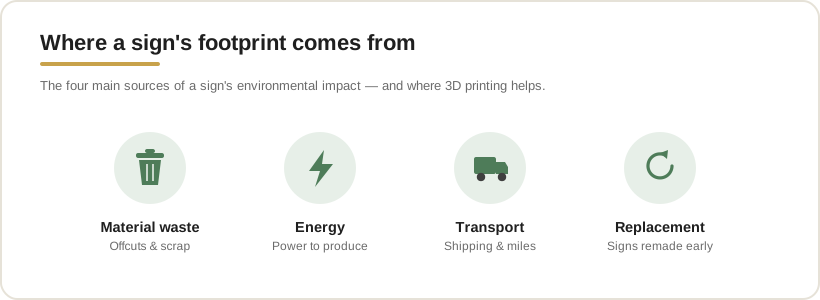
A sign’s footprint isn’t one thing – it’s the sum of several:
- Material waste – the offcuts and scrap left over from cutting and forming.
- Energy – the electricity used to produce it.
- Transport – the emissions from shipping materials and finished signs around.
- Replacement – signs that fail or fade early and have to be remade.
3D printing improves on most of these, and the biggest gains come from how the process works.
Additive vs subtractive: less waste by design
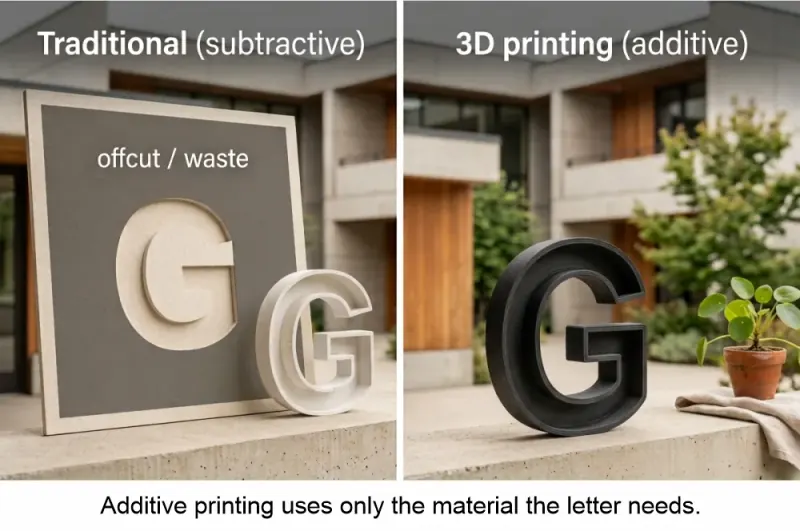
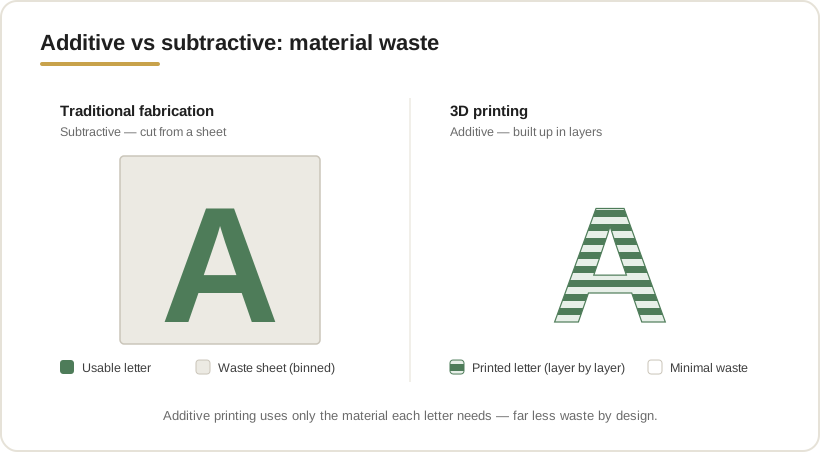
Traditional sign fabrication is largely subtractive – you start with a sheet of acrylic or metal and cut, rout or machine away the bits you don’t need. Everything you remove becomes offcut and scrap.
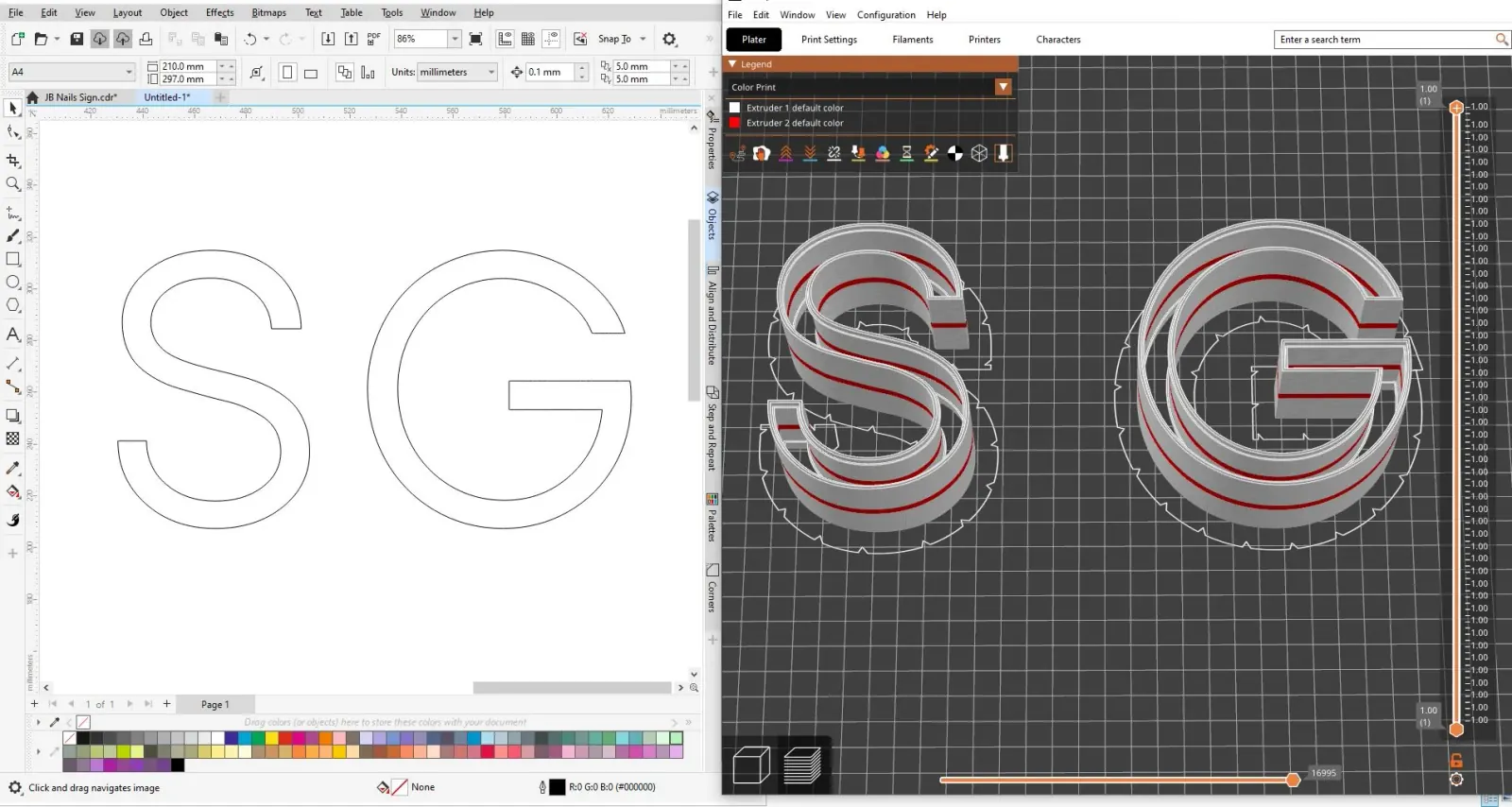
3D printing is additive: it builds a letter up layer by layer, depositing only the material the letter actually needs. There’s no cutting away, so there’s far less waste by design. For a sign maker producing dimensional letters, that’s a meaningful reduction in the raw material thrown away on every job – and material you don’t waste is material you don’t pay for, so the environmental and commercial cases point the same way.
Precise, on-demand production
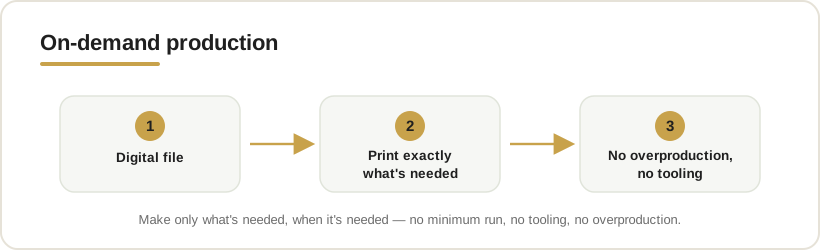
Because each letter is produced from a digital file, you make exactly what’s needed, when it’s needed. There’s no minimum production run, no tooling to justify with volume, and no overproduction “just in case”. A typical letter uses a precise, predictable amount of filament – around 60-70 metres for a 30 × 40 × 5 cm letter – rather than an unpredictable amount of sheet material with the rest binned. On-demand production also means less stock sitting unused.
Low energy, low carbon
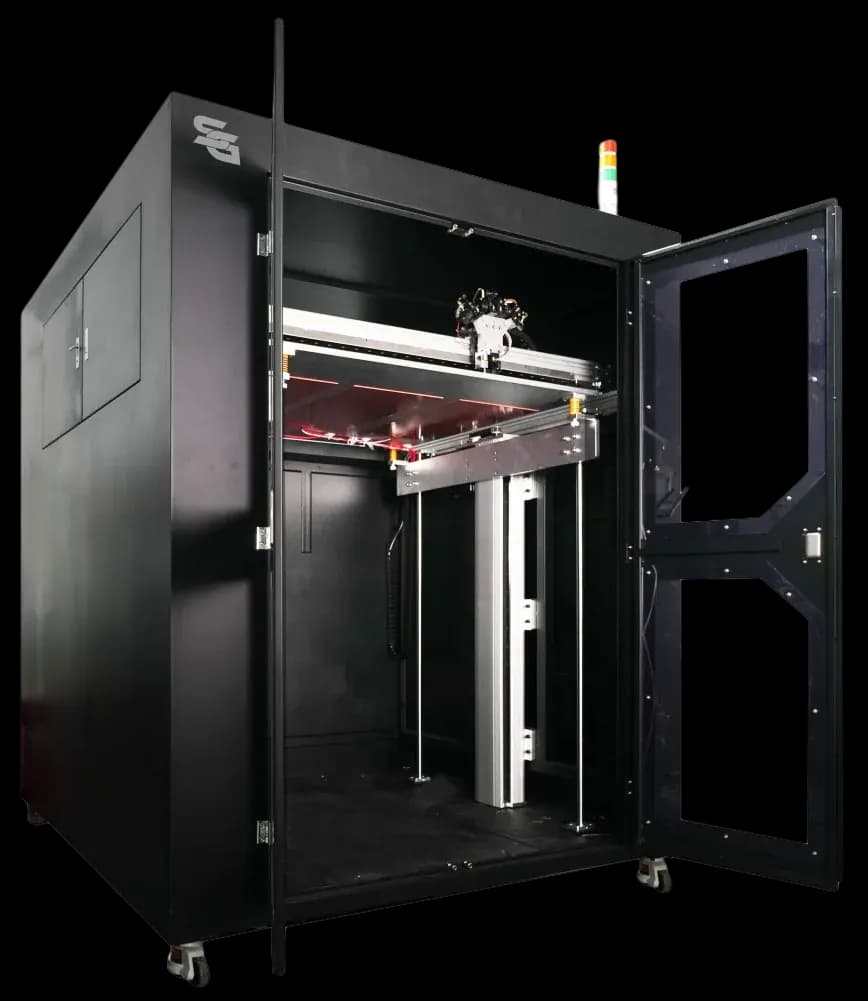
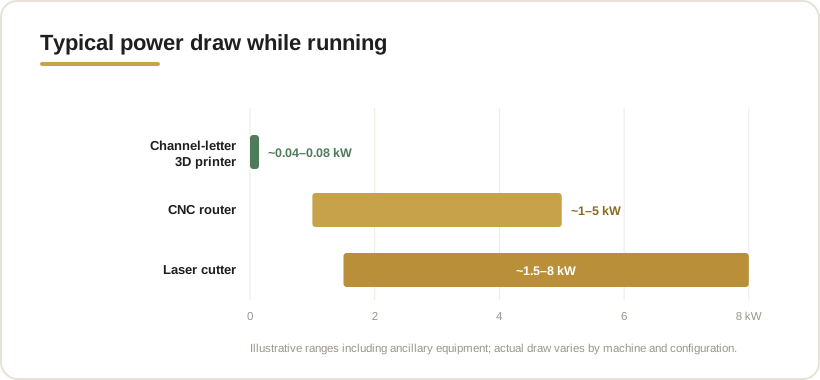
Energy is where the contrast is starkest. An SG 3D letter printer draws just 1-2 kWh over a full 24 hours of printing – an average of around 40-80 watts. That’s a fraction of the power drawn by traditional fabrication equipment such as CNC routers and laser cutters with their motors, vacuum pumps and chillers.
Lower energy use means lower running costs and a smaller carbon footprint for every sign you produce. We go into the numbers in our guide to sign-making running costs. Pairing low-energy production with efficient LED lighting keeps the finished sign’s footprint down over its whole life, too.
Local, in-house production cuts transport
Every time a sign or its components are shipped – especially imported from overseas – there’s a transport footprint attached. Producing signage in-house and locally, rather than outsourcing or importing finished letters, cuts those transport miles. For UK sign makers, bringing production home (which also makes commercial sense, as our in-house vs outsourcing guide sets out) shortens the supply chain and the emissions that come with it.
Signs that last longer mean less waste
The most sustainable sign is one you don’t have to remake. A sign that fades, warps or fails early has to be replaced – doubling its material and energy footprint. Produced in a durable, weatherproof material like HFPC and built properly, 3D-printed channel letters are made to last for years outdoors, as we explain in our guide to whether 3D-printed signs are weatherproof. Longevity is an underrated part of sustainability.
Materials and recyclability
The signs are produced from thermoplastics, and thermoplastics generally lend themselves to recycling better than mixed or composite sign constructions. PLA, for example, is derived from renewable plant-based sources, and PETG is widely recyclable. Purpose-made signage materials are engineered first for performance – even illumination and weather resistance – so recyclability varies by material; check the specific material’s guidance. The broader point stands: precise material use and recyclable thermoplastics are a step up from the mixed-material, high-offcut approach of traditional fabrication.
An honest view
It’s worth being straight about this: 3D printing isn’t zero-impact. It uses plastic and electricity, and no manufacturing process is free of footprint. The honest claim isn’t that 3D-printed signage is “green” in absolute terms – it’s that, compared with traditional fabrication, it meaningfully reduces material waste, energy use and transport for the same finished sign. That’s a real, defensible improvement, and it’s the kind of claim that stands up to scrutiny rather than tipping into greenwashing.
Sustainability as a selling point
For sign makers, this is also a commercial opportunity. More and more clients – particularly larger brands with ESG or net-zero commitments – want to know their suppliers are reducing impact. Being able to offer a lower-waste, lower-energy, locally produced signage option is a genuine differentiator, and one worth putting front and centre when you pitch. It lets your clients tell a better sustainability story too, which is increasingly part of how they choose who to work with.
Frequently asked questions
Is 3D printing more sustainable than traditional sign making? For dimensional signage, generally yes. As an additive process it produces far less material waste than cutting or routing, uses much less energy, and – produced locally – cuts transport emissions. It isn’t zero-impact, but it’s a meaningful improvement for the same finished sign.
Are 3D-printed signs recyclable? They’re made from thermoplastics, which generally recycle better than mixed-material sign constructions; PLA is plant-based and PETG is widely recyclable. Recyclability varies by the specific material, so check its guidance – but precise material use and recyclable plastics are a step up from high-offcut fabrication.
Does 3D printing use a lot of energy? No – an SG channel-letter printer draws only about 1-2 kWh over 24 hours (roughly 40-80 watts), far less than traditional fabrication kit, which keeps both running costs and carbon footprint low.
Can offering sustainable signage help win work? Yes. Many clients, especially brands with environmental commitments, actively prefer suppliers who reduce impact, so a lower-waste, lower-energy, locally produced option is a real selling point.
Offer your clients a greener sign
Want to add lower-waste, lower-energy signage to what you offer? Get in touch and we’ll show you how 3D-printed channel letters compare. To see the energy and cost side, start with our guide to sign-making running costs.