What Can You Actually Make With a 3D Printer? Real World Applications and Products
Published Updated
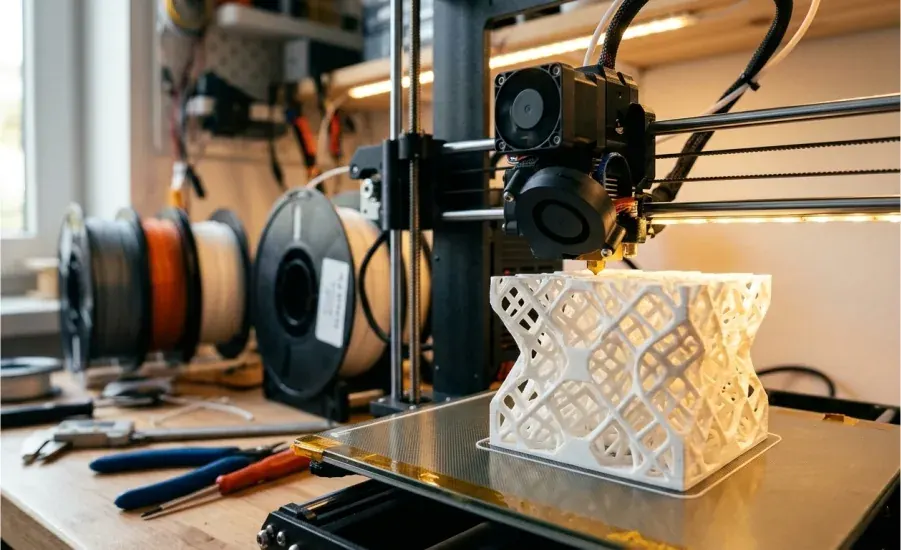
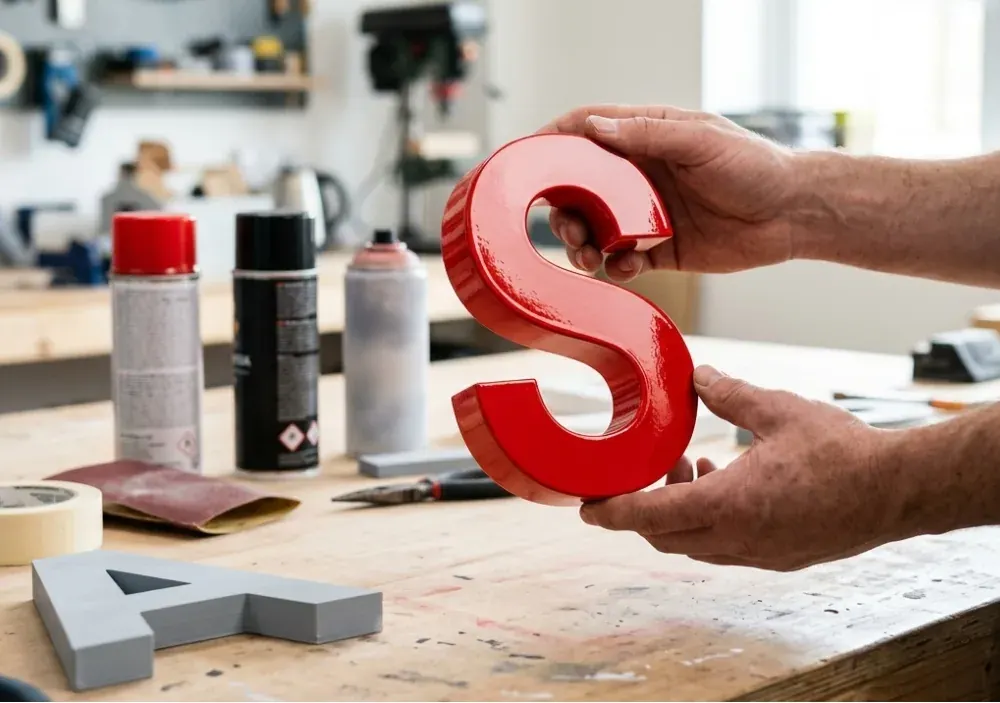
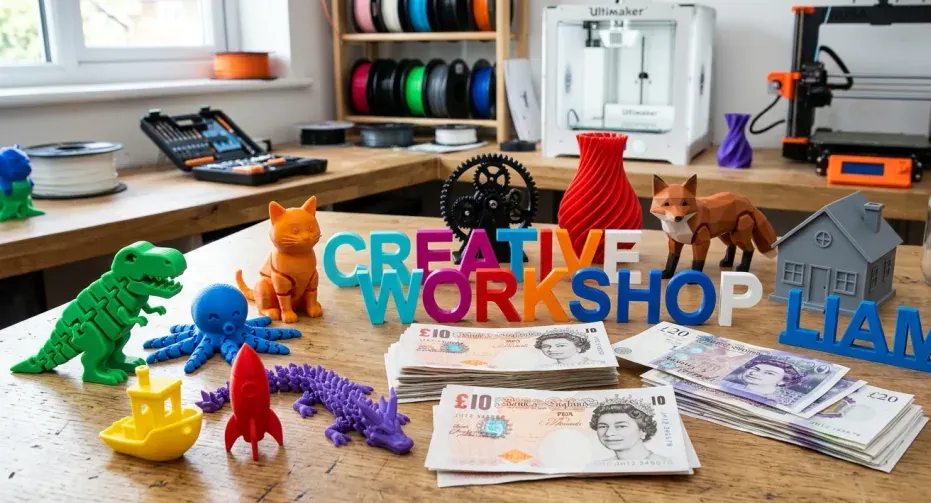
With a 3D printer, you can make functional prototypes, replacement parts, custom tools, medical devices (including dental aligners, prosthetics, and surgical guides), architectural models, 3D illuminated letters, jewellery, miniatures, cosplay props, household items, automotive and aerospace components, footwear, food, and even entire houses. The exact range depends on the printer type, desktop FDM machines handle everyday plastic parts, while industrial SLS, SLA, and metal printers produce end-use products for aerospace, medical, and manufacturing industries.
3D printing has quietly moved from “hobbyist novelty” to a core production technology. Boeing, Adidas, Invisalign, and SpaceX all rely on it. So do dentists in UK, small e-commerce sellers, and design students. This guide walks through what’s genuinely being made on 3D printers today, organised by industry, so you can see where the technology fits your needs.
Quick Overview: What 3D Printers Make, by Category
| Category | Common Products | Typical Printer Type |
|---|---|---|
| Consumer & Household | Phone stands, organisers, hooks, replacement knobs | FDM |
| Prototyping | Product mock-ups, design iterations, fit tests | FDM, SLA |
| Medical & Dental | Aligners, crowns, surgical guides, prosthetics | SLA, DLP, SLS |
| Aerospace | Brackets, ducts, fuel nozzles, satellite parts | Metal (DMLS, EBM) |
| Automotive | Jigs, fixtures, custom interior parts | FDM, SLS, Metal |
| Construction | Houses, bridges, formwork, concrete elements | Construction-scale extrusion |
| Fashion & Jewellery | Rings, earrings, shoe midsoles, eyewear | SLA, DLP, SLS |
| Education | Anatomical models, engineering parts, art projects | FDM |
| Food | Chocolates, pasta, decorative sugar work | Food-grade extrusion |
| Art & Décor | Sculptures, lamps, vases, custom homeware | FDM, SLA |
What you can actually make with a 3D printer
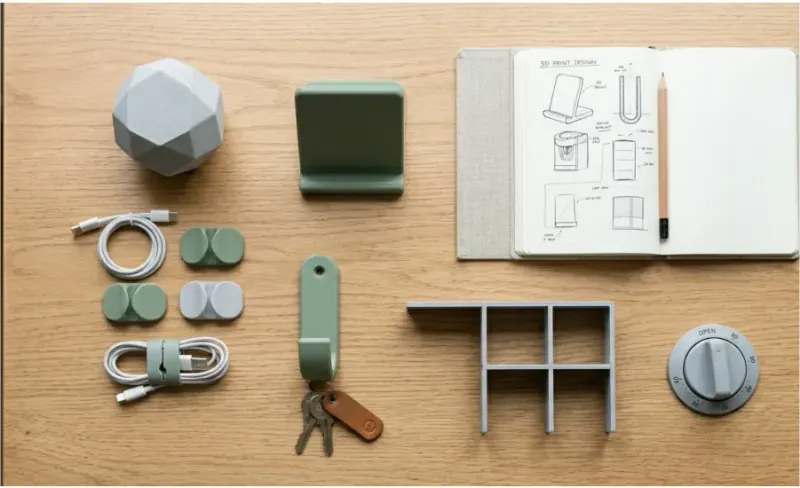
1. Everyday Household and Consumer Products
The most common starting point. A desktop FDM printer can produce:
- Replacement parts: broken dishwasher knobs, washing machine clips, fridge handles, fan brackets. A small reprint costs cents in filament versus tens of dollars for an OEM part, when one is even available.
- Organisers and storage: drawer dividers, cable holders, desk organisers sized to your desk.
- Phone stands, headphone hooks, tablet mounts.
- Hooks, clips, hangers, and brackets in custom sizes.
- Toys, board game pieces, puzzles, and replacements for lost game components.
This is where most home users see the printer pay for itself: small, slightly-customised problems that nobody mass-produces solutions for.
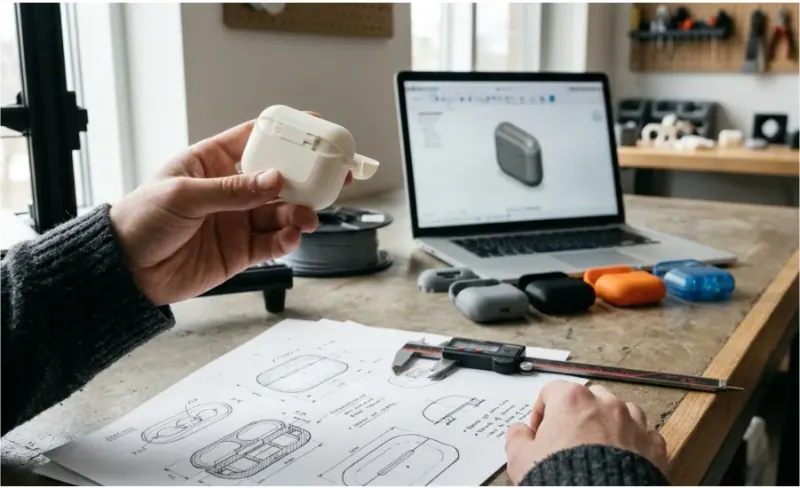
2. Functional Prototypes and Product Design
Prototyping is still the largest commercial use of 3D printing globally. Designers and engineers use it to:
- Validate physical fit, ergonomics, and aesthetics before committing to injection moulding.
- Iterate quickly: a design change can be printed and tested the same day instead of waiting weeks for a tooling change.
- Make low-volume production parts where moulding doesn’t make economic sense (typically under a few thousand units).
Industries that print prototypes daily include consumer electronics, packaging, medical devices, and industrial design consultancies.
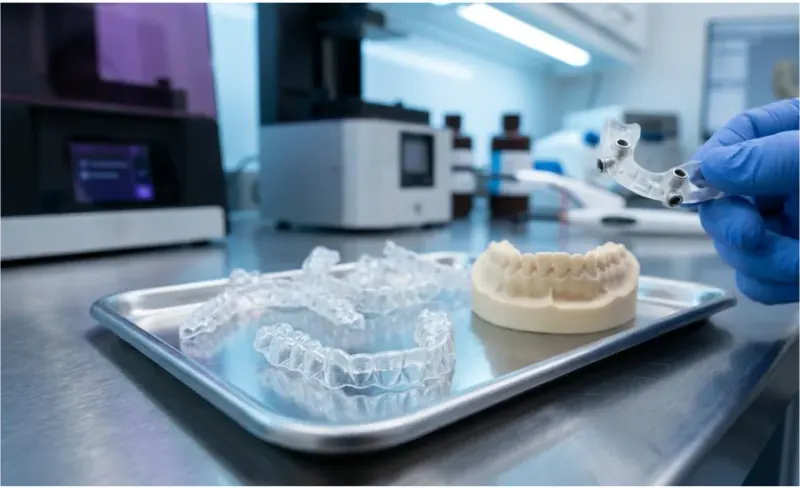
3. Medical and Dental Products
Healthcare is one of 3D printing’s most impactful applications:
- Dental aligners: Invisalign alone prints hundreds of thousands of custom aligner moulds every day.
- Crowns, bridges, and dentures printed directly in biocompatible resins.
- Surgical guides that match a specific patient’s anatomy, improving accuracy in orthopaedic and dental surgery.
- Prosthetic limbs and orthotic braces, often at a fraction of traditional cost, particularly meaningful for paediatric prosthetics that need replacing as children grow.
- Hearing aid shells: virtually 100% of custom in-ear hearing aids are now 3D printed.
- Anatomical models for pre-surgical planning, printed from patient CT or MRI scans.
- Patient-specific implants in titanium, including cranial plates and spinal cages.
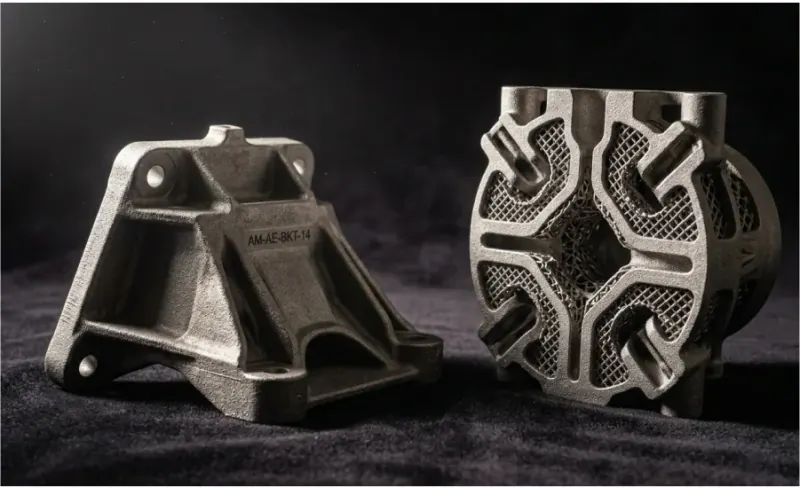
4. Aerospace and Defence Components
Aerospace was an early adopter because the industry values weight savings and complex geometries enough to justify the cost. Real production parts include:
- GE Aviation’s LEAP engine fuel nozzles: printed in metal, combining 20 parts into one, and now flying on commercial aircraft.
- Air ducts, brackets, and cabin parts on Airbus and Boeing aircraft.
- Satellite components and rocket engine parts: Relativity Space prints nearly entire rockets, and SpaceX uses printed SuperDraco thruster chambers.
- Drone frames and housings for both commercial and defence applications.
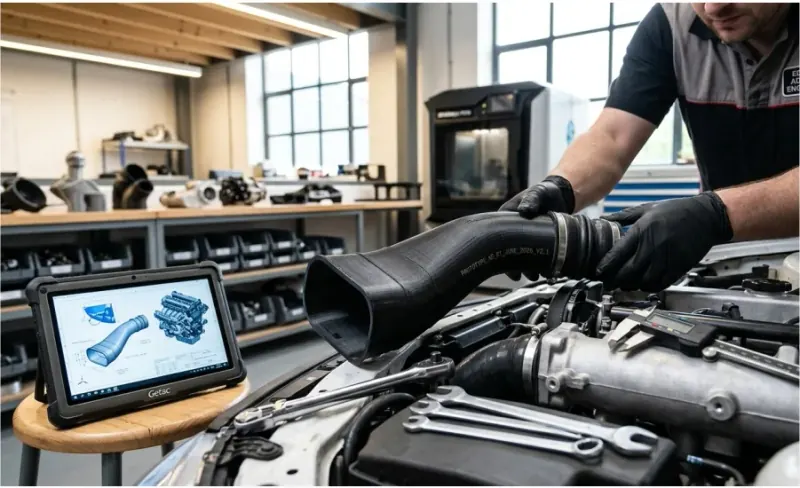
5. Automotive Parts
Carmakers use 3D printing for both prototyping and end-use parts:
- Jigs, fixtures, and assembly aids on production lines.
- Custom interior components in low-volume luxury and racing vehicles.
- Tooling and inspection gauges.
- Spare parts for classic and out-of-production cars: Porsche, Bentley, and Mercedes-Benz all print legacy parts on demand.
- Lightweight performance parts in motorsport, including F1 cooling ducts and brackets.
6. Construction and Architecture
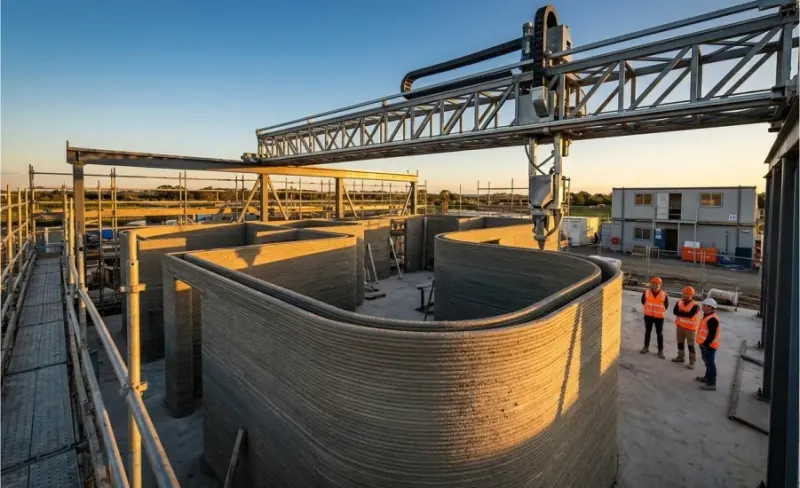
Large-format printing has moved from concept to reality:
- Houses and apartment buildings printed in concrete or earth-based mixtures. ICON in the US and several European firms have delivered occupied 3D-printed homes.
- Bridges: including a stainless steel pedestrian bridge in Amsterdam.
- Architectural models and façade elements for design presentations and bespoke building features.
- Formwork and custom concrete moulds, allowing architects to build curves and shapes that traditional formwork can’t economically produce.
7. Fashion, Footwear, and Jewellery
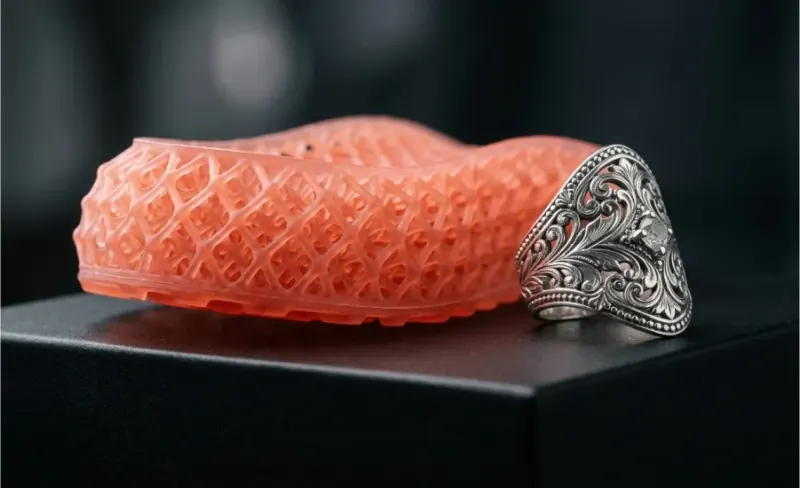
- Athletic shoe midsoles: Adidas 4DFWD and similar models feature lattice midsoles only possible through 3D printing.
- Custom eyewear fitted to individual face scans.
- Jewellery: designers print master patterns in castable resin, then cast them in gold, silver, or platinum. Fully printed metal jewellery is also common.
- Avant-garde fashion pieces, accessories, handbags, and structured garment elements seen on runways from Iris van Herpen and others.
8. Education and Research
- Anatomical and biological models for medical and biology students.
- Engineering parts: students design and print working mechanisms, gears, and assemblies.
- Historical and archaeological replicas that can be handled without risking the original artefact.
- Custom lab equipment, jigs, and adapters: research labs routinely print custom holders, mounts, and microfluidic devices for far less than commercial equivalents.
9. Food
A smaller but growing category:
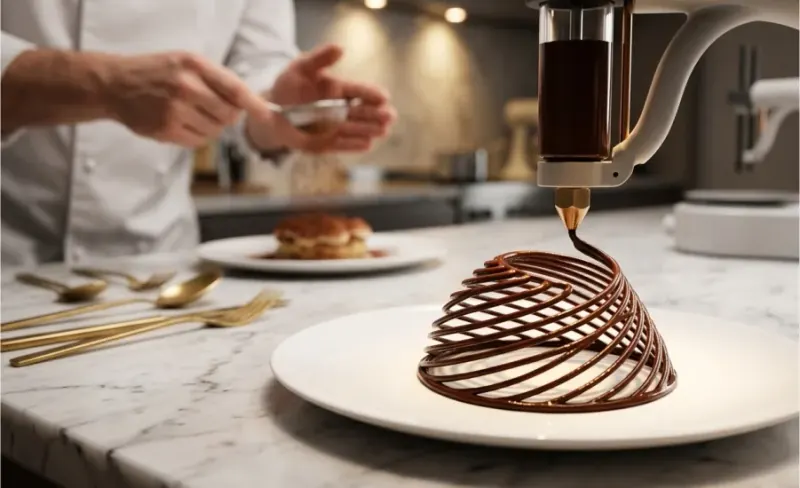
- Chocolates, pralines, and sugar decorations in shapes impossible to mould.
- Pasta and dough in customised shapes.
- Plant-based meat alternatives, where companies like Redefine Meat print fibrous textures layer by layer.
- Restaurant plating and bespoke patisserie for fine-dining presentations.
10. Art, Sculpture, and Home Décor
- Vases, lamps, and lampshades with geometries impossible to mould or turn.
- Sculpture and installation art, including pieces that combine printed elements with traditional materials.
- Custom homeware: soap dishes, planters, picture frames, candle holders.
- Cosplay armour, props, helmets, and weapons. This is a huge community use case, with whole cottage industries selling printable STL files.
- Miniatures for tabletop gaming (Warhammer, D&D), printed on resin printers at extremely fine detail.

11. Industrial Manufacturing Aids
Often overlooked, but enormously valuable in factories:
- Custom jigs, fixtures, and assembly guides that used to be machined from aluminium.
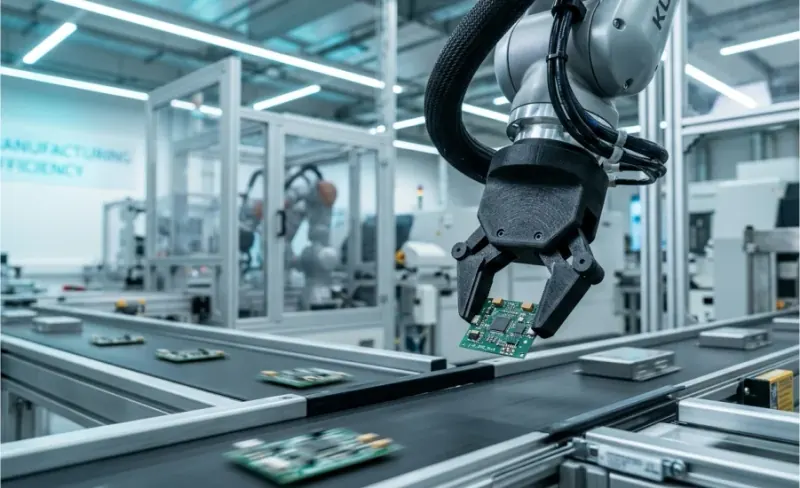
- End-of-arm tooling for robotic pick-and-place.
- Soft jaws for vices and CNC fixturing.
- Spare parts for production machinery: printing a worn bracket overnight beats waiting two weeks for a shipped replacement.
What Can’t Most 3D Printers Make?
To set realistic expectations, current 3D printers struggle with:
- Optically clear parts: possible with SLA, but rarely truly transparent without post-processing.
- Large, fully isotropic structural parts in plastic: layer adhesion is still weaker than the print direction.
- High-temperature electronics: PCBs still need traditional manufacturing, though housings around them are commonly printed.
- Parts requiring extreme dimensional tolerances (sub-0.05 mm) without secondary machining.
- Mass-produced identical items at the scale of injection moulding: printing 100,000 identical small parts is still slower and more expensive than moulding.
How to Choose What to Print
A few quick rules of thumb:
- If you need one or a few of something custom: 3D printing almost always wins.
- If you need thousands of identical items: consider injection moulding or CNC.
- If it needs to be food-safe, skin-contact, or medical: use the right certified materials and a printer suited to them (usually SLA or DLP with biocompatible resins).
- If it needs to be strong and lightweight: look at SLS nylon or metal printing rather than desktop FDM.
- If it needs fine surface detail: resin (SLA/DLP) beats filament (FDM) every time.
Frequently Asked Questions
What is the most common thing people make with 3D printers?
Functional prototypes for industry and small consumer items (replacement parts, organisers, miniatures, cosplay props) for hobbyists. Globally by volume, dental aligner moulds are likely the single most-printed item.
Can you make money with a 3D printer?
Yes. Common income streams include selling miniatures and tabletop minis, custom cosplay props, jewellery, prototyping services for local businesses, dental and orthodontic lab work, and architectural models for property developers.
Can a 3D printer make metal parts?
Yes, but not a typical desktop printer. Metal parts are made on industrial printers using processes like DMLS (Direct Metal Laser Sintering), EBM (Electron Beam Melting), or binder jetting. Desktop users access metal parts by printing a pattern in castable resin and having it cast.
Can you print things that touch food?
Yes, with care. Use food-safe filament (some PETG and PLA grades), and ideally a food-safe coating or sealer, because the layer lines themselves can harbour bacteria. Better still, print a mould and cast the food-contact item in food-grade silicone.
How strong are 3D printed parts?
Depends heavily on the material and process. SLS nylon and printed metal parts are genuinely structural and used in aircraft. Desktop FDM parts in PLA are fine for light-duty use but weaker along layer lines. PETG, ABS, and especially nylon and polycarbonate produce much tougher FDM parts.
What’s the difference between FDM, SLA, and SLS?
- FDM melts and extrudes plastic filament: cheapest, most versatile for everyday parts.
- SLA / DLP cures liquid resin with UV light: finest detail, best for jewellery, dental, miniatures.
- SLS sinters nylon powder with a laser: strongest plastic parts, no supports needed, great for functional end-use parts.
Can you print a whole house?
Yes. Multiple companies, ICON, COBOD, WASP, have printed habitable homes, primarily in concrete. They still need traditional plumbing, electrical, windows, and roofing installed conventionally.
What’s the most useful thing a beginner can print?
Practical fixes around the home: a broken appliance knob, a custom drawer organiser, a phone stand sized to your specific desk, or a wall hook for an awkward spot. These build skills fast and demonstrate the value of the machine immediately.
Final Thoughts
3D printing is no longer about printing toys. It’s a real production technology making implants, aircraft parts, houses, shoes, and millions of dental devices every year, while at the same time letting a homeowner reprint a £40 dishwasher knob for 30 cents in filament. The right question isn’t whether a 3D printer can make something useful for you. It’s which printer suits the kind of things you’ll actually make.
If you’re exploring what’s possible for your business, classroom, lab, or home, browse our range of FDM, resin, and industrial 3D printers or get in touch. We’ll help you match the technology to the application.