Can I Make Money With a 3D Printer? Real Business Opportunities in the UK (2026)
Published Updated
Short answer: Yes. A single desktop 3D printer can realistically earn between £200 and £2,500 per month as a side income, and full print farms in the UK are generating five-figure monthly revenues. The key is choosing the right niche, pricing for value, and treating the printer as a small manufacturing tool, not a toy.
If you have ever watched filament feed into a hot-end and thought, “this thing could pay for itself” – it can. This guide breaks down every credible way to make money with a 3D printer in 2026, what each opportunity actually pays, what you need to start, and the realities of running a print business in the UK.
Quick Answer: How Much Can You Make With a 3D Printer?
Here is a realistic income breakdown based on 2026 market data for the UK:
| Stage | Setup | Realistic Monthly Income (GBP) |
|---|---|---|
| Beginner side hustle | 1 printer, evenings only | £200 – £800 |
| Serious side hustle | 2–3 printers, automated | £800 – £2,800 |
| Small print farm | 4–8 printers, dedicated space | £2,800 – £9,500 |
| Full business | 10+ printers, staff, B2B clients | £9,500+ |
Gross margins for premium, customised 3D-printed goods typically sit between 30% and 70%, which is significantly higher than reselling or dropshipping. The economics are simple: a kilogram of PLA filament costs around £18–£25 and can produce roughly £100–£200 worth of finished product.
So, Can You Actually Make Money With a 3D Printer?
Yes, and the barrier to entry in 2026 is the lowest it has ever been. A capable enclosed CoreXY printer like a Bambu Lab P1S or A1 Mini now costs under £600, prints four times faster than printers from just three years ago, and runs almost unattended. Combine that with AI tools that generate 3D models from text prompts (eliminating the design bottleneck that used to scare beginners off), and you have a genuine micro-manufacturing business that fits on a desk.
The catch: making money with a 3D printer is not the same as making money from a 3D printer. The printer is the easy part. The skill is choosing a niche customers will pay a premium for, photographing it well, listing it on the right channel, and shipping it reliably. People who treat it as a hobby first and a business second tend to plateau at £150–£300/month. People who pick one focused niche and run it like a business tend to scale.
The 12 Best Business Opportunities With 3D Printing in 2026
Here are the most profitable, beginner-accessible 3D printing business models, ranked roughly by ease of entry.
1. Selling on Etsy, eBay UK and Vinted
The default starting point for most makers. Etsy gives you global reach in premium pricing; eBay UK and Vinted give you fast access to domestic buyers; Facebook Marketplace and Gumtree work well for larger, local-pickup items. The trick is to avoid saturated categories (generic phone stands, basic dragon figurines) and target micro-niches large sellers ignore – for example, accessories for a specific brand of e-bike, organisers for a specific hobby, or decor items themed around niche fandoms. A product selling 50 units a month at £22 each is £1,100 from a single SKU.
Realistic earnings: £400–£2,500/month with 5–8 active products.
2. Custom Prototyping for Local Businesses and Inventors
The UK has a dense ecosystem of startups, hardware engineers, and SMEs who need physical prototypes – sometimes within 24 hours. London’s Old Street tech corridor, Cambridge’s hardware cluster, Manchester’s MediaCityUK, and Bristol’s engineering scene are all rich sources of prototyping work. Charging £30–£60 per hour of print time plus design fees, prototyping is one of the highest-margin services you can offer. Outreach is straightforward: connect with engineers on LinkedIn, partner with co-working spaces and university innovation hubs, and list on prototyping marketplaces.
Realistic earnings: £600–£4,000/month part-time.
3. Tabletop Gaming Miniatures and Terrain
One of the most profitable niches globally, and the UK has one of the world’s strongest wargaming scenes – Warhammer (Games Workshop is British), Bolt Action, Frostgrave, and a thriving D&D community. Players regularly spend hundreds of pounds on miniatures. Licensing artist files from MyMiniFactory or Patreon platforms like Loot Studios gives you commercial rights to print and sell. A resin printer (Anycubic Photon, Elegoo Saturn) is preferred here for fine detail. Margins are excellent because customers pay for finish quality and uniqueness, not material cost. The UK Games Expo in Birmingham and Salute in London are excellent shop windows.
Realistic earnings: £500–£2,800/month.
4. Cosplay Props, Armour and Costume Pieces
The UK cosplay scene is huge and underserved by domestic makers – MCM Comic Con runs in London, Birmingham, and Manchester; the London Film and Comic Con and Insomnia Gaming Festival add hundreds of thousands more attendees. Helmets, gauntlets, weapons, and accessories sell for £60–£500 each. This niche rewards patience and finishing skill – sanding, priming, and painting are where the real value is added.
Realistic earnings: £800–£3,500/month with commissioned work.
5. Replacement Parts and Discontinued Components
A quietly enormous market. Broken knobs on kitchen appliances, discontinued IKEA hardware, vintage hi-fi parts, retro game console components, drone arms, RC car spares, classic Mini and Land Rover trim pieces — buyers will pay a premium because the alternative is throwing the whole product away. Scan or model the part, list it on Etsy and eBay UK, and let SEO do the work over time. The UK’s love of restoration projects (classic cars, vintage radios, retro computers) makes this niche especially strong.
Realistic earnings: £200–£1,500/month, largely passive after listings mature.
6. Custom Phone Accessories, Keycaps, and Tech Gear
Mechanical keyboard keycaps, MagSafe accessories, cable organisers, and desk setup pieces target a high-spending tech audience. The UK mechanical keyboard community is particularly active, with annual meetups in London and Manchester. Resin-printed artisan keycaps regularly sell for £25–£90 each.
Realistic earnings: £300–£2,000/month.
7. Personalised Gifts and Corporate Gifting
Name-engraved keychains, custom Christmas ornaments, wedding favours, christening keepsakes, pet portrait reliefs, and personalised desk nameplates. The UK corporate gifting market is large – staff awards, conference giveaways, and Christmas gifting all need bulk customised items. One corporate order of 200 customised pieces at £12 each is a £2,400 day.
Realistic earnings: £400–£3,500/month, lumpy but high-margin.
8. Jewellery and Fashion Accessories
Resin printing has made bespoke earrings, pendants, and rings a viable home business. Designs can be parametric (offering custom sizes, initials, or birth dates). Pair with metal plating services or lost-wax casting partners (Birmingham’s Jewellery Quarter has a dense network) for premium price points. Instagram and TikTok are the primary discovery channels.
Realistic earnings: £300–£2,000/month.
9. Architectural Models for Property and Design Firms
UK property developers, architects, and interior design firms regularly commission scale models for planning applications, sales suites, and pitches. A single residential development model can be priced at £1,200–£6,500 depending on size and detail. This is a lower-volume, higher-ticket opportunity that pairs well with services like rendering and visualisation. London property marketing budgets in particular can support high-end work.
Realistic earnings: £1,200–£8,000 per project, project-based.
10. Medical and Dental Models
A specialised niche but a serious one. Anatomical training models, surgical planning replicas printed from CT/MRI scans, and dental aligners (for licensed orthodontic practices) are growing categories. This requires biocompatible resins, MHRA regulatory awareness, and typically a B2B sales approach. Higher barrier to entry but very defensible margins. The NHS and UK private dental sector are both active buyers.
Realistic earnings: £1,500–£12,000/month for established operators.
11. Selling Digital STL Files
Skip the printing entirely. Design 3D models, sell the files on Cults3D, MyMiniFactory, Thangs, or your own Patreon. Pure digital product, infinite margin, no shipping. The challenge is design skill and audience-building — most successful STL designers spent 6–18 months building a following before consistent revenue.
Realistic earnings: £150–£4,000/month, fully passive once established.
12. Workshops, Courses, and YouTube/TikTok Content
As 3D printing becomes mainstream in UK schools (it’s increasingly part of D&T curricula) and library makerspaces, demand is rising for teachers. Run weekend workshops (£50–£150 per participant), half-term holiday programmes, or corporate team-building sessions. Add a Teachable course or affiliate links to printers and filament for passive income. This pairs naturally with running an active social media channel.
Realistic earnings: £400–£2,500/month combined with another model on this list.
What You Need to Start a 3D Printing Business in the UK
You do not need a warehouse or a £20,000 industrial printer. A realistic starter setup looks like this:
- Printer: One reliable enclosed FDM printer (Bambu Lab A1 / P1S, Creality K1, Prusa MK4S) – roughly £300–£1,000. Add a resin printer later if your niche needs fine detail.
- Filament and consumables: A starter stock of PLA, PETG, and possibly TPU – £120–£300.
- Software: Free options cover almost everything. Slicers like Bambu Studio, OrcaSlicer, and PrusaSlicer are free. Tinkercad and Fusion 360 (free for personal use) handle design. AI tools like Meshy and Hitem3D can generate models from text prompts.
- Workspace: A ventilated corner with stable temperature. Flat-friendly – enclosed printers handle noise and odour well. Resin printers need separate ventilation, ideally in a utility room, garage, or shed.
- Sales channels: eBay UK, Vinted, and Facebook Marketplace for domestic sales, Etsy for international, plus a Shopify or Instagram storefront once volume justifies it.
- Business registration: Register as a sole trader with HMRC for free (online Self Assessment registration). A limited company via Companies House costs £50 online. Required once income exceeds £1,000/year (the trading allowance).
- VAT: Only required if your rolling 12-month turnover exceeds £90,000 (the 2026/27 threshold), so most starting print businesses operate well below that line.
- Insurance: Public liability and product liability insurance is sensible from day one – typically £60–£150/year through providers like Simply Business or Hiscox.
Total realistic startup cost: £500–£1,500 for everything needed to take the first paying order.
The Honest Challenges (And How to Beat Them)
3D printing businesses fail for predictable reasons. Knowing them in advance is most of the solution.
Print failures eat your margins. A 12-hour print that fails at hour 11 burns filament, electricity, and the customer’s deadline. Solution: enclosed printers, AMS or automated material handling, and printing test pieces before committing to long jobs.
Time-on-the-machine is not time-paid. Beginners often calculate cost as filament price plus a small markup, ignoring electricity, slicer setup, post-processing, packing, photography, and listing time. Real cost per part includes all of it. A useful rule: price at 4–6x the raw material cost for retail goods, never less than 3x.
Niche choice matters more than printer choice. A great printer in a saturated niche underperforms a basic printer in a fresh niche. Spend more time researching Etsy bestsellers, eBay UK trends, and underserved hobby communities than comparing printer spec sheets.
UK-specific: shipping is your friend, not your enemy. Royal Mail Tracked 24/48, Evri, and InPost lockers give you affordable next-day options across the country. Most buyers expect £3–£5 standard postage; offer free P&P only when you’ve built it into the price. For international Etsy buyers, Royal Mail International Tracked is the workhorse.
Best 3D Printers for Starting a Business in the UK (2026)
The current sweet-spot picks for new print businesses:
- Bambu Lab A1 / A1 Mini – best entry point. Fast, reliable, supports multi-colour with AMS Lite. Widely available through UK retailers.
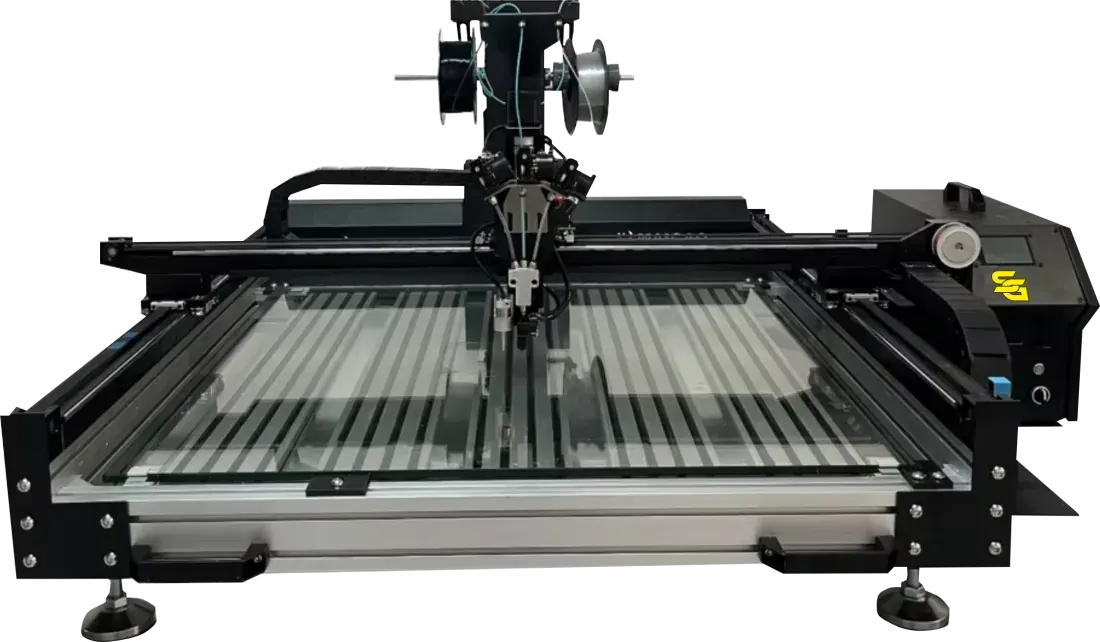
- SG-S L1S Pro – best 3D printer for making signage letters and more
- Bambu Lab P1S – the print-farm favourite. Enclosed, fast, ABS/ASA capable.
- Creality K1 / K1 Max – strong value for larger build volumes.
- Prusa MK4S – slower but bulletproof reliability and excellent support (and Prusa’s Czech-based European support is responsive to UK customers), ideal for commercial reliability.
- Anycubic Photon Mono M5s / Elegoo Saturn 4 Ultra – top resin choices for miniatures, jewellery, and dental work.
Browse our full range of 3D printers for current UK pricing and stock.
Frequently Asked Questions
Is 3D printing still profitable in 2026?
Yes. While generic categories (basic phone stands, common dragon figurines) are saturated, profitable niches are expanding faster than competitors can fill them. Gross margins on customised goods remain 30–70%, and tools like AI-driven design generation have lowered the skill barrier dramatically.
How long does it take to make back the cost of a 3D printer?
Most beginner side hustles recover the cost of a £400–£700 printer within 2–4 months of consistent selling. Print farms targeting Etsy or eBay bestsellers often pay back hardware in 14–30 days.
Do I need to register a business to sell 3D prints in the UK?
If your total trading income across all side hustles is under £1,000 a year, you can use the HMRC trading allowance and don’t need to register. Above that, you must register as a sole trader with HMRC for Self Assessment (free). A limited company via Companies House costs £50 if you want the additional protection and tax flexibility. VAT registration is only required once your rolling 12-month turnover exceeds £90,000.
Can I sell 3D prints of models I downloaded online?
Only if the licence allows commercial use. Most Thingiverse models are personal use only. Platforms like MyMiniFactory, Cults3D, and Patreon creators frequently offer commercial licences – read each model’s terms. The safest path is to design your own files or commission a designer.
What is the best 3D printer for beginners who want to make money?
The Bambu Lab A1 or P1S for FDM, or an Elegoo Saturn 4 Ultra for resin. All three balance reliability, speed, and cost – the three factors that actually determine whether you make money or fight your printer.
How do I find a profitable 3D printing niche?
Browse Etsy bestsellers in 3D-printed categories, check eBay UK and Vinted trending searches, look at Google Trends UK for rising terms, and identify hobby communities (gaming, cosplay, fishing, cycling, model railways, classic cars) that have specific accessory needs. The best niches are ones where you are already part of the community – you understand what is missing.
Can I run a 3D printing business from a flat?
Yes. Enclosed FDM printers are quiet and produce minimal fumes, making them flat-friendly. Check your tenancy agreement or lease for any clauses about running a business from home – most allow low-impact remote work. Resin printing requires more ventilation due to fumes, so a utility room, garage, shed, or balcony is preferable. Many successful UK print businesses started in a corner of a bedroom or under the stairs.
How much does electricity add to the cost per print?
Less than most people expect. A modern 3D printer draws roughly 100–150W during printing. At Ofgem-capped UK electricity rates of around £0.27/kWh, a 10-hour print costs approximately £0.27–£0.40 in electricity – usually less than 5% of total cost per part.
Do I need to declare 3D printing income on my Self Assessment?
Yes, once your total trading income exceeds the £1,000 trading allowance in a tax year. You declare it on the self-employment pages of your Self Assessment tax return. Keep records of all sales, filament purchases, printer costs, electricity (apportioned), and any other business expenses – these reduce your taxable profit.
The Bottom Line
You can absolutely make money with a 3D printer in the UK in 2026 – but the printer is the smallest part of the equation. The makers earning £1,500+ per month are the ones who pick one niche, ship reliably, photograph their work well, and treat their printer like a business asset rather than a toy. Start with one machine. Pick one product. List it on one channel. Get the first ten sales, then scale.
If you are ready to start, browse our range of business-ready 3D printers and consumables – we stock the exact models referenced in this guide and ship across the UK.
SG 3D Printers is a UK 3D printing specialist supplying FDM and resin printers, filaments, resins, and accessories to hobbyists, businesses, and educators nationwide.