Starting a 3D Letter Sign Business: Complete Guide to Industrial 3D Printers
Published Updated
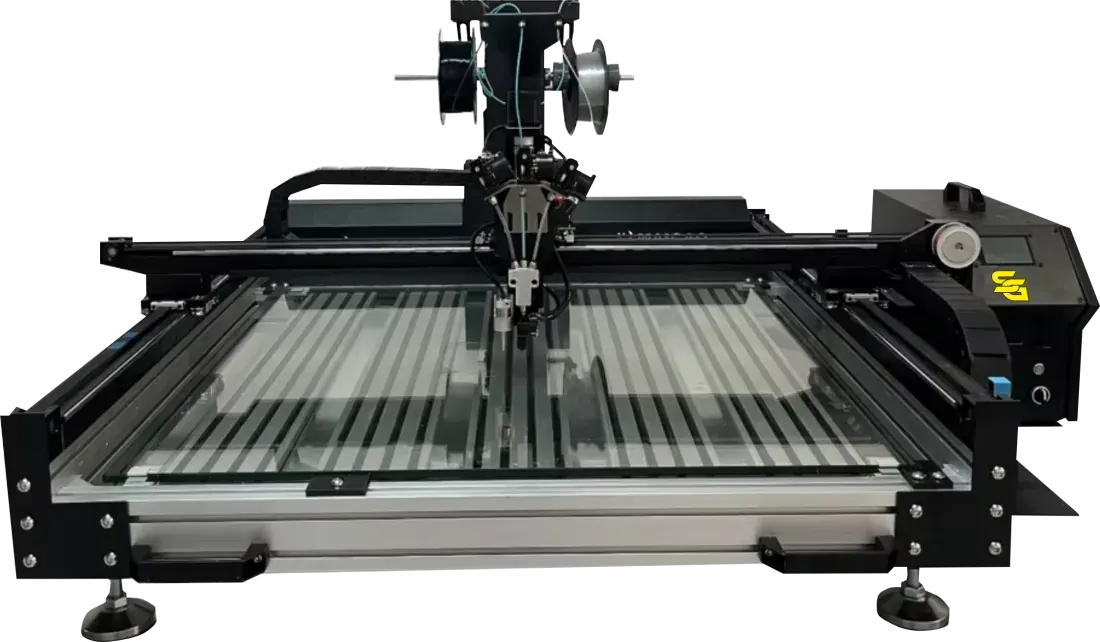
If you’re considering entering the world of 3D printed channel letters but don’t yet have hands-on experience, you’re in a strong position. With a background in graphic design and access to modern industrial printers like those from SG 3D Printers, the learning curve is far less steep than most expect.
This guide answers the most important questions about producing outdoor letters in a Mediterranean climate like Croatia – including materials, wall thickness, software workflow, production capacity, and printer model differences.
Why 3D Printing is Ideal for Channel Letters
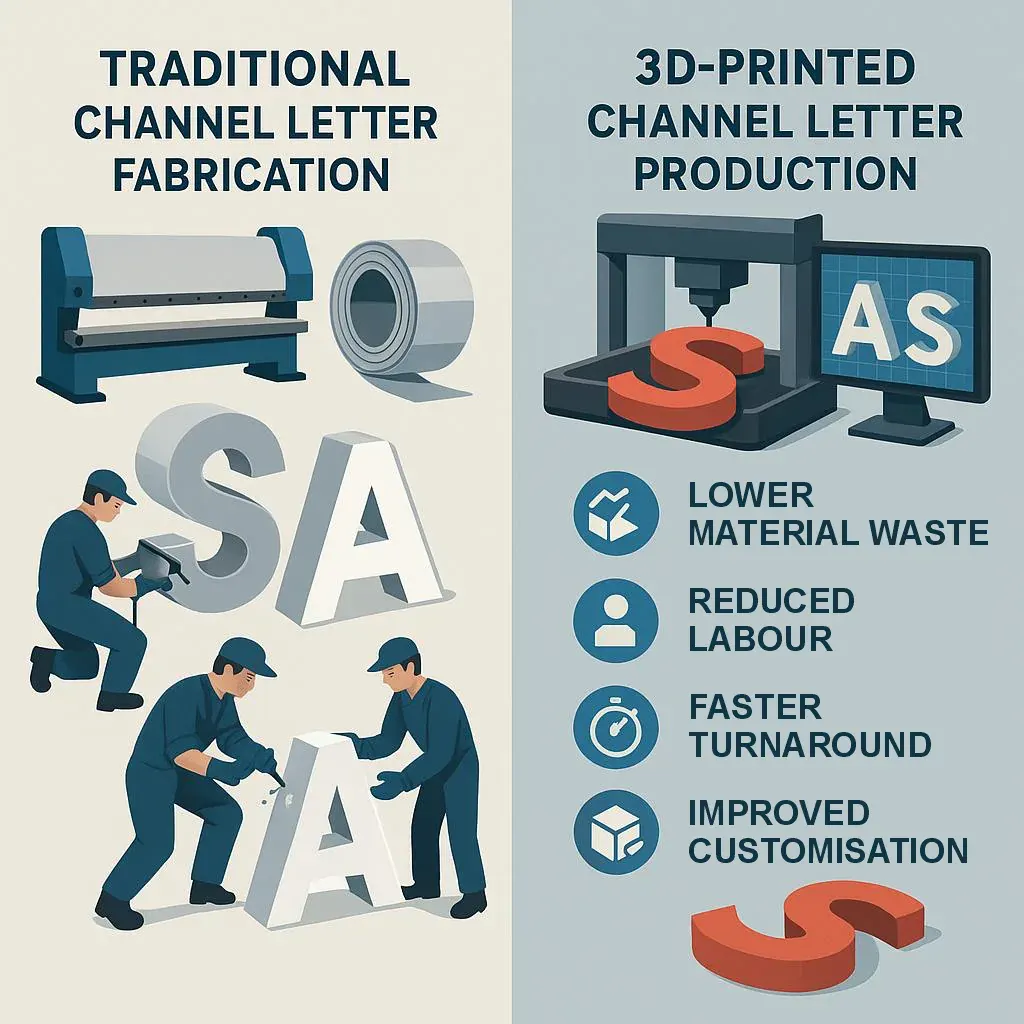
Traditional letter fabrication involves:
- CNC routing
- Acrylic bending
- Manual assembly
- Multiple material sourcing
Industrial 3D printers streamline this into a single, automated workflow, allowing:
- Faster turnaround
- Lower labor costs
- On-demand production
- Custom small-batch runs
- Reduced waste
For startups and expanding sign businesses, this creates a highly scalable model.
1. Maximum Letter Dimensions for Outdoor Use (Mediterranean Climate)
In hot Mediterranean environment, material performance matters more than size limitation.
There is no strict maximum letter dimension imposed by the printer itself. However, for outdoor durability – especially under high summer temperatures – the recommended material is:
HFPC (High-Performance Polymer Composite)
Developed specifically for illuminated signage and channel letters, HFPC is:
- Based on modified polycarbonate (PC) and PETG
- Reinforced with functional additives
- Highly UV resistant
- Weather-resistant
- Structurally stable in extreme heat
- Optically clear for illuminated applications
For Mediterranean climates, HFPC ensures:
- No warping
- No yellowing
- Excellent light diffusion
- Long-term dimensional stability
Recommendation:
For larger letters exposed to full sun, increase wall thickness (see section 6 below) rather than limiting size.
2. Surface Finish & Post-Processing Requirements
Is sanding, priming, or finishing required?
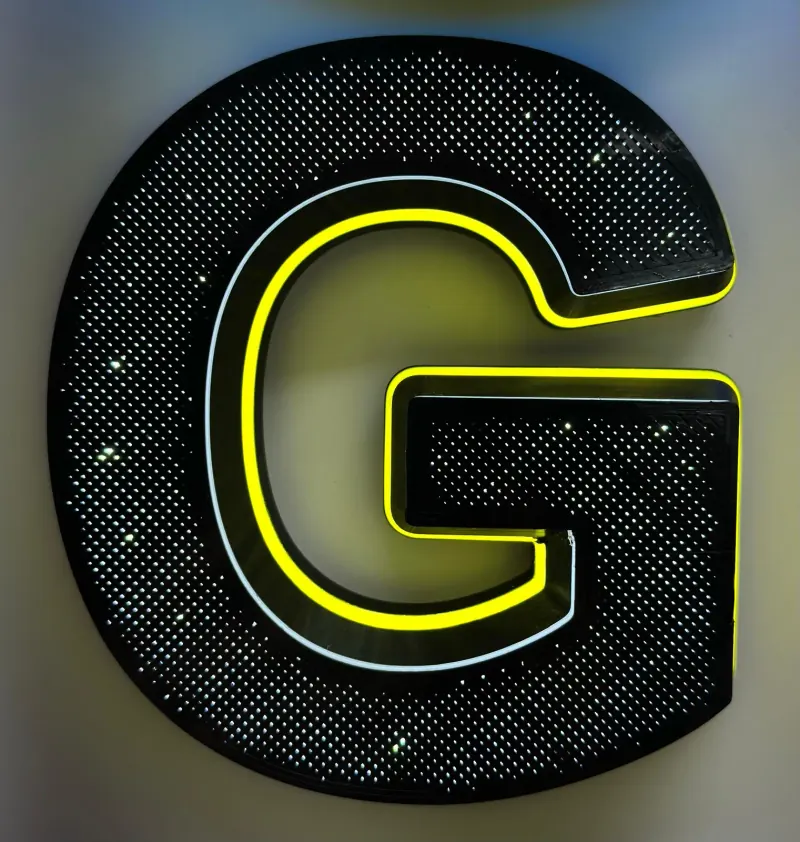
The surface quality directly from the printer is very smooth, suitable for finishing immediately.
- No heavy sanding required
- Can be painted directly
- Compatible with automotive-grade paint
This is a major advantage over standard FDM hobby printers, which often require significant surface preparation.
For premium jobs:
- Light sanding (optional)
- Car-grade spray finish
- Clear protective coat (for high UV exposure)
For most applications, direct painting is sufficient.
3. Software Workflow: From Graphic Design to Printing
If you have experience in graphic design software, you already have the most important foundation.
Step-by-Step Workflow
Create letter design in:
- CorelDRAW
- Adobe Illustrator
- Export as DXF file
- Open in SG 3D Printers’s proprietary printer software plugin
Choose letter type:
- Wall-only
- Backlit
- Frontlit
- Front printed
- Lightbox
- Custom structures
- Adjust parameters
- Preview final result
- Slice file
- Generate G-code
- Send to printer
The system is built for production efficiency, not complex 3D modeling.
No advanced 3D sculpting knowledge is required.
Additionally, video training sessions can be arranged to help beginners master the basics quickly.
4. Production Capacity: Output & Material Usage
Let’s use an example:
Letter Size:
40 × 40 × 6 cm
Solid base + ~1 mm side walls
Print speed: 90 mm/sec
Per Letter:
- Filament usage: 25.84 meters
- Print time: ~45 minutes
From 400 meters of filament:
- Approximately 15 letters
The printer is capable of speeds up to 300 mm/sec, meaning production time can be optimized depending on job type and quality settings.
This makes short production runs economically viable.
5. ULTRA vs PRO ULTRA Models
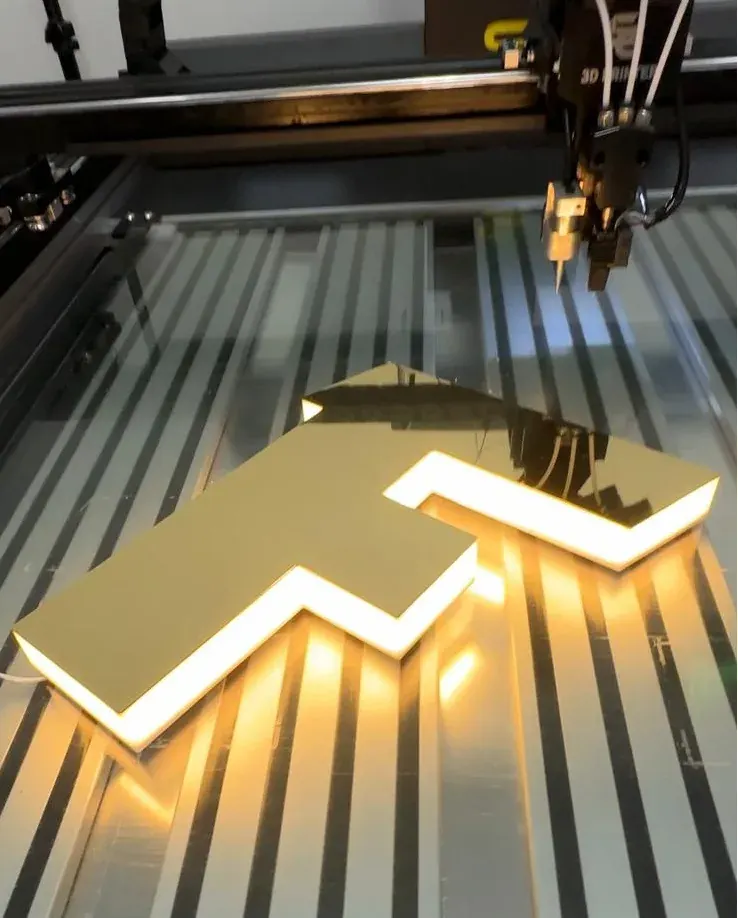
The key differentiator is the integration of UV curing technology.
What Do the UV Lamps Do?
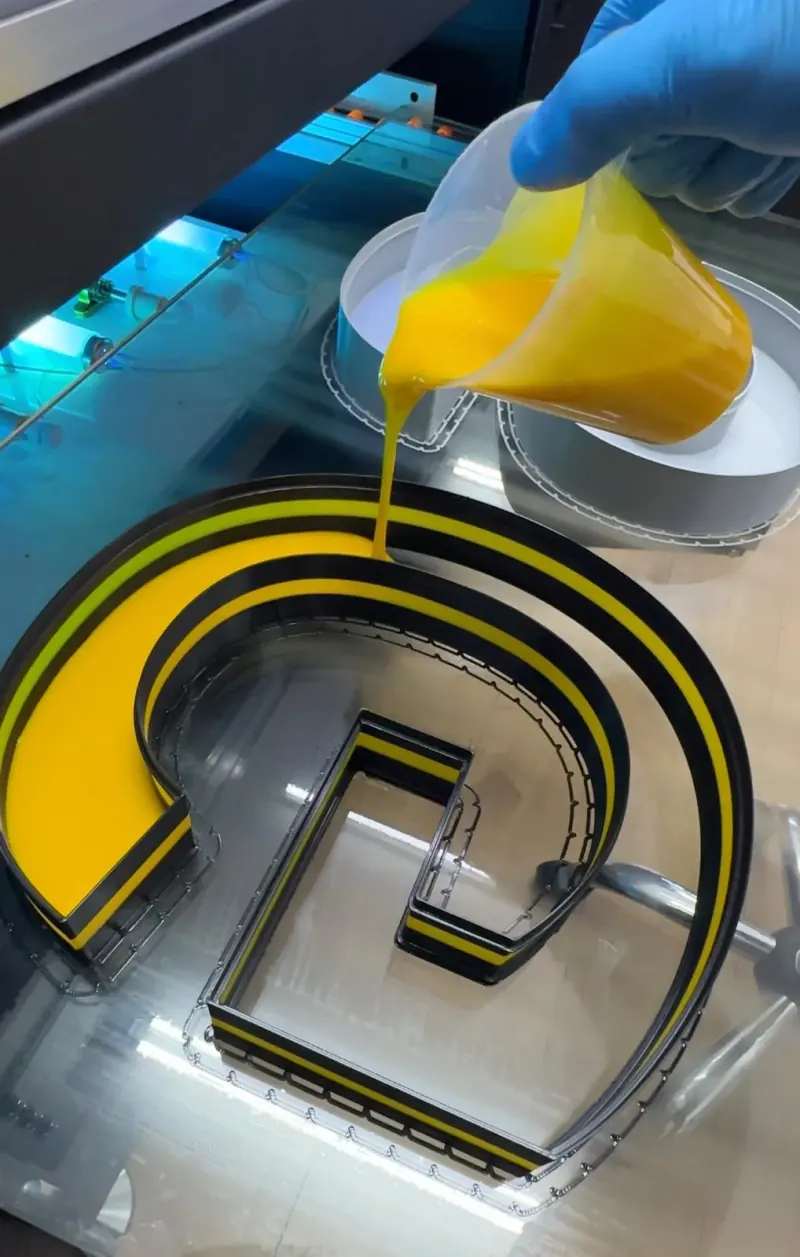
The UV lamps cure liquid acrylic after the printing process.
Instead of using:
- Traditional acrylic faces
- Opaque printed filament faces
You can apply liquid acrylic, which:
- Is cured instantly under UV
- Hardens into standard acrylic
- Enables production of small illuminated 3D letters
- Allows advanced light colours diffusion effects
This expands creative possibilities, especially for:
- Small 3D illuminated logos
- Complex shapes
- Premium signage applications
To see working examples, review demonstration content on SG 3D Printers website and social channels, including their blog section:
https://sg3dprinters.com/blog/
6. Recommended Wall Thickness (Indoor vs Outdoor)
Based on UK production standards:
| Application | Recommended Wall Thickness |
|---|---|
| Indoor | 1.2 mm |
| Outdoor (standard) | 2.4 mm |
| Outdoor (hot Mediterranean climate) | 3.6 mm |
For high summer temperatures, 3.6 mm outdoor wall thickness provides added safety against deformation.
More thickness is typically unnecessary.
Is This Suitable for a Beginner?
Although these are industrial-grade machines capable of operating 24/7 for months, they are:
- Robust
- Low-maintenance
- Designed for production environments
- User-friendly for newcomers
- Key advantages for beginners:
- No complex 3D modeling required
- Graphic design skills transfer directly
- Predictable material consumption
- Fast ROI due to short print times
- Low maintenance costs
Additional Recommendations for Starting Letter Production
- Start with medium-sized letters (30–50 cm range)
- Use HFPC for all outdoor jobs
- Standardize wall thickness for your climate
- Test paint compatibility early
- Track filament usage per job for cost modeling
- Offer both illuminated and non-illuminated options
- Document your process for scalability
Final Thoughts
Launching a 3D letter production operation in Croatia is entirely feasible – especially with industrial systems from SG 3D Printers designed specifically for signage manufacturing.
With:
- High-performance outdoor materials
- Smooth print finishes
- UV-cured acrylic integration
- Fast production cycles
- Simplified software workflow
You can transition from graphic designer to sign manufacturer efficiently and profitably.