Best 3D Printer 2025: Top Picks & New UK/EU Market Additions
Published Updated
3D printing has evolved rapidly over the past few years. Whether you’re a hobbyist making miniatures, a designer prototyping ideas, or a business producing signage or custom parts – choosing the right 3D printer is key. With so many models on the market today, you need to know what features matter most. This guide will help you pick the “best 3D printer” for your needs – and also highlight an exciting new addition to the UK/EU market that’s worth your attention.
What "Best" Means — Features That Actually Matter
When evaluating 3D printers, there’s no one-size-fits-all. The “best” printer depends on your goals. Here’s what to pay attention to:
Build technology: FDM vs Resin vs Specialty
- FDM / Fused Filament Deposition printers remain the most versatile and budget-friendly option. They let you print in common materials like PLA, PETG, ABS, and more. Their running costs can be reasonable, and for many applications – from prototypes to large functional parts – FDM works great.
- Resin / MSLA / SLA printers excel if you need high detail and smooth surfaces – think miniatures, jewellery, dental models, or highly precise parts.
- Specialty or Industrial printers – for larger-format prints, signage, or parts needing unique materials – might offer dual-extruder setups, multi-colour printing, or even hybrid processes.
Reliability, Ease-of-Use and Maintenance Cost
Cheap printers might sound tempting, but a “best” printer should deliver consistent results without turning every print into a struggle. Auto-bed levelling, reliable filament feeding, good community / support, and stable firmware all count. Tom’s Hardware
For resin printers, post-processing (cleaning, curing) and safe handling are trade-offs – but for high-detail work, those trade-offs are often worth it. whatsthebest.co.uk
Print volume & speed (when size or throughput matters)
If you’re printing large items, signage, functional parts or multiple items – build volume and print speed matter. Smaller hobby-focused printers might struggle with large-scale output or batch jobs.
Materials & Finished Product Requirements
Depending on your project, you might need strong, weather-resistant materials (for outdoors), transparent materials, or specialty filaments. For functional prototypes or engineering parts, strength and durability are as important as precision. 3DJake
Use Case: Hobbyist vs Professional vs Industrial / Business
- Hobbyists or tinkerers value affordability, flexibility, ease of use.
- Designers or small businesses value versatility, print volume, reliability.
- Industrial or commercial users value consistency, automation, specialized materials, speed, and scalability.
With those evaluation criteria in mind – let’s look at a traditional “best 3D printer” approach, and also at a newer option rising in the UK/EU.

Well-Regarded 3D Printers in 2025 (Beginners → Enthusiasts → Professionals)
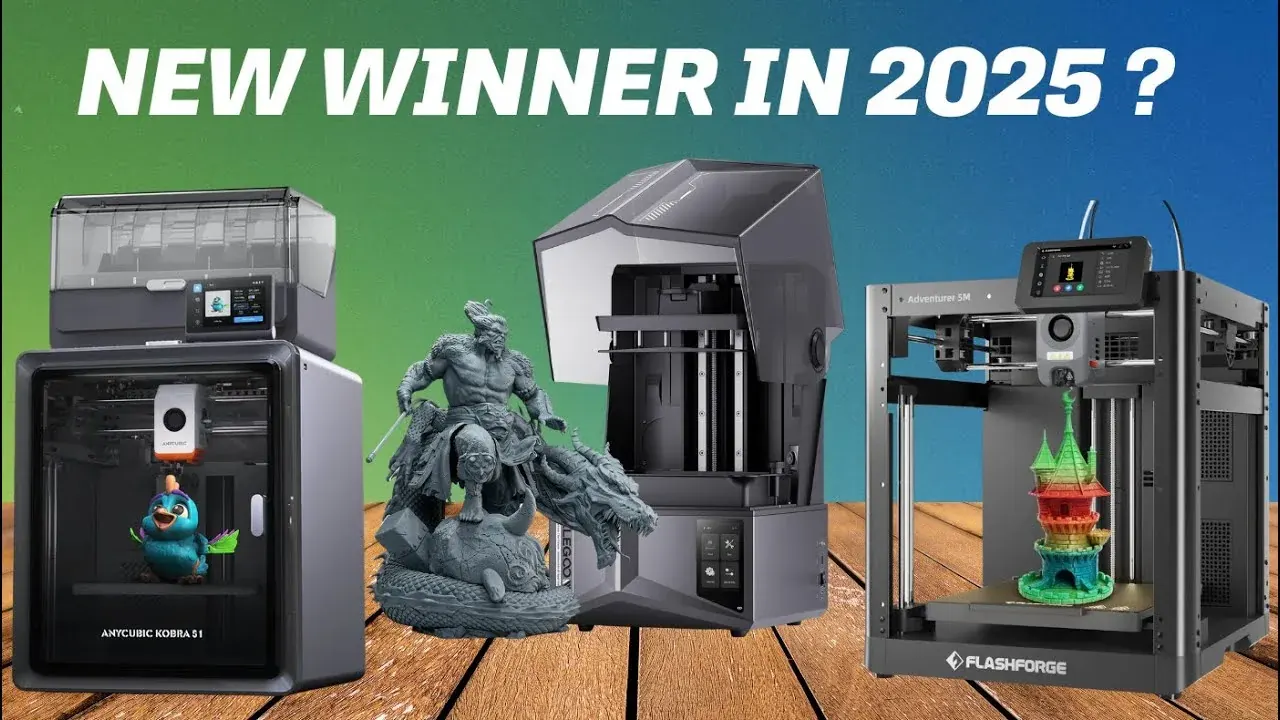
Industry reviews from 2025 show a range of strong performers depending on needs:
- For beginners or budget-conscious users, compact FDM printers offer low cost per print, ease of use, and reasonable output quality.
- For high-detail work (miniatures, models, resin art, dental, prototypes) – resin printers remain unmatched thanks to their high resolution and smooth finish.
- For larger prints, functional parts, signage, or business-grade output – printers with bigger build volumes, dual-extruders or even hybrid printing capabilities give the most flexibility.
But while many of the “typical” printers satisfy hobbyists and small-scale needs – what if you need something more industrial, something designed for production rather than just weekend tinkering? That’s where the next section becomes relevant.
New on the UK / EU Market: Sign Group’s Channel-Letter / Industrial 3D Printers
If you’re looking beyond hobby use – perhaps into signage, large-format model-making, or production-grade output – a promising new option comes from Sign Group. Their recently launched 3D printers are tailored for channel letters, signage, 3D sign-making and professional 3D fabrication.
Here’s what they offer:
- Models: Among others, the SG-S 3D ULTRA and SG-S 3D Pro ULTRA – build sizes up to 800×800 mm or 1200×1200 mm – far larger than typical hobby printers.
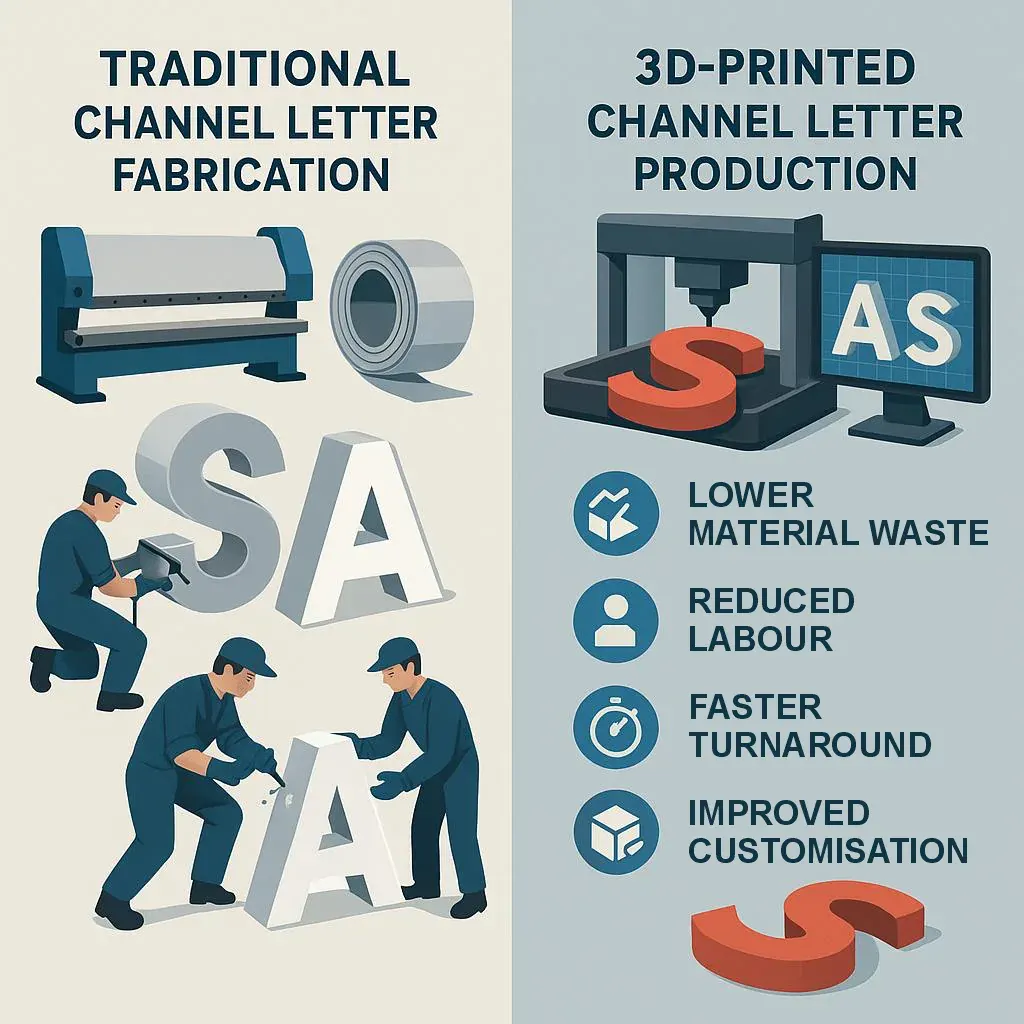
- Automation & Efficiency: One-click 3D file generation (from design to print-ready), auto-levelling, touchscreen control, and continuous 24-hour operation. That means in a business setting, one operator could manage multiple machines – scaling output without equivalent increases in labour.
- Materials & Use Cases: The printers support specialty materials like weather-resistant HFPC (High Flexible Polymer Composite), suitable for outdoor illuminated signage, resilient in UV and harsh conditions, with strong adhesion and good optical clarity for lighting effects.
- Quality & Professional Finish: For those needing channel letters, illuminated signs, or architectural signage – Sign Group’s printers offer full automation, UV-curing options (for acrylic faces), and consistent output quality.
Why this matters: Up till now many 3D printers on the market are aimed at hobbyists, small workshops or prototyping. With Sign Group’s entry, there’s now a UK-assembled, business-oriented 3D printing solution that tilts the value balance towards production-level use, ideal for visual communication companies, signage shops, or businesses needing large, quality 3D prints – potentially replacing traditional metal/fabrication signage techniques.
If you run or plan to launch a 3D printing service – or you’re heavy on large-format custom signage – Sign Group’s printers are likely among the best 3D printing solutions available in the UK/EU today.
Who Should Use What: Matching Printer Type to Your Needs
| Your Need / Use Case | Recommended Printer Type | Why |
|---|---|---|
| Starting out, small prints, hobby projects, learning the ropes | Entry-level FDM or small resin printers | Low cost, flexible, enough for miniatures, prototypes, fun prints |
| High-detail work: miniatures, models, figurines, prototypes | Resin / MSLA printers | High resolution and smooth finish, ideal for detailed prints |
| Functional parts, prototypes, larger prints, practical projects | Mid-to-large FDM printers | Material flexibility, larger volume, strength, affordability |
| Signage, large format signage/letters, illuminated channel letters, business production | Sign Group’s industrial 3D printers (SG-S 3D ULTRA / Pro ULTRA) | Big build volume, automation, specialty materials, professional finish, designed for business workflow |
| Mixed use or shop setup (occasional small prints + regular signage / production) | Hybrid: smaller FDM/resin for detail + large-format / industrial FDM for big jobs | Flexibility and cost-effectiveness: small prints don’t require industrial overhead; big jobs get done on dedicated hardware |
Conclusion — The “Best 3D Printer” Depends on What You Want to Do
In 2025, the 3D printing market has matured. For many hobbyists, small-business owners, or creators, you can find excellent budget 3D printers that balance cost, ease-of-use, and quality. For those needing detail – resin printers remain unbeatable.
But for production-level work – especially signage, large prints, or business-grade output – the new entrants from Sign Group represent a compelling leap forward. Their SG-S 3D ULTRA / Pro ULTRA printers bring industrial-scale build volume, automation, and materials engineered for durability and outdoor use to the UK/EU market, making them among the “best 3D printers” – if you need professionalism over hobby-level tinkering.
Bottom line: choose your 3D printer based on your use case. And if your work demands volume, reliability, and professional output – don’t overlook these new industrial-grade printers from Sign Group. The “best 3D printer” is the one that matches your goals, not necessarily the most popular sale item.