What Materials Can 3D Printers Use? Complete Guide
Published Updated
What Materials Can 3D Printers Use? Understanding Your Material Options
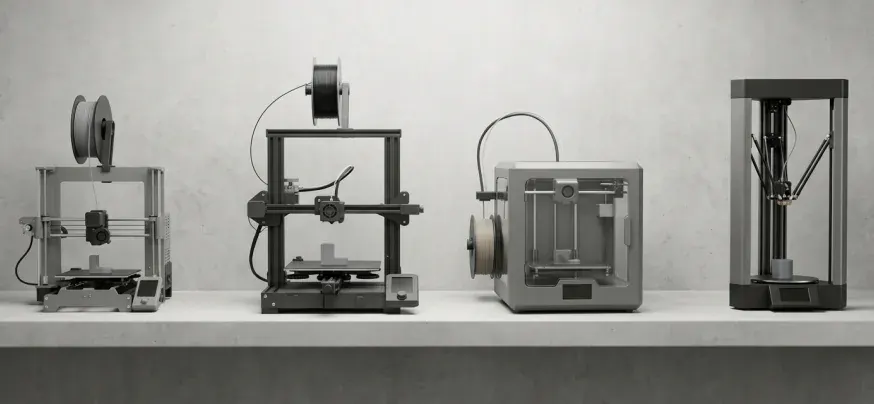
3D printers can use a remarkably wide range of materials, from everyday plastics like PLA and PETG to liquid resins, fine powders, metals such as titanium and stainless steel, and even ceramics, concrete and food. The material you can print with depends entirely on the type of 3D printing technology your machine uses.
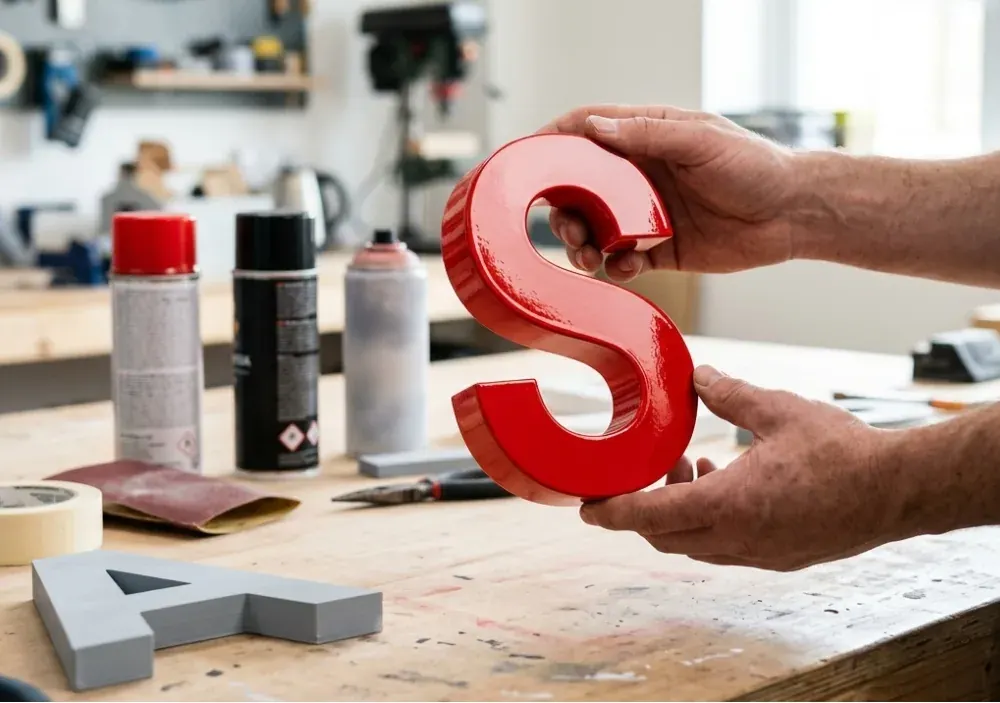
This guide breaks down every major 3D printing material family, what each one is best for, and how to choose the right material for your project, whether you are prototyping a part, printing a sculpture, or producing illuminated channel letters for signage.
Quick Answer: The Main Types of 3D Printing Material
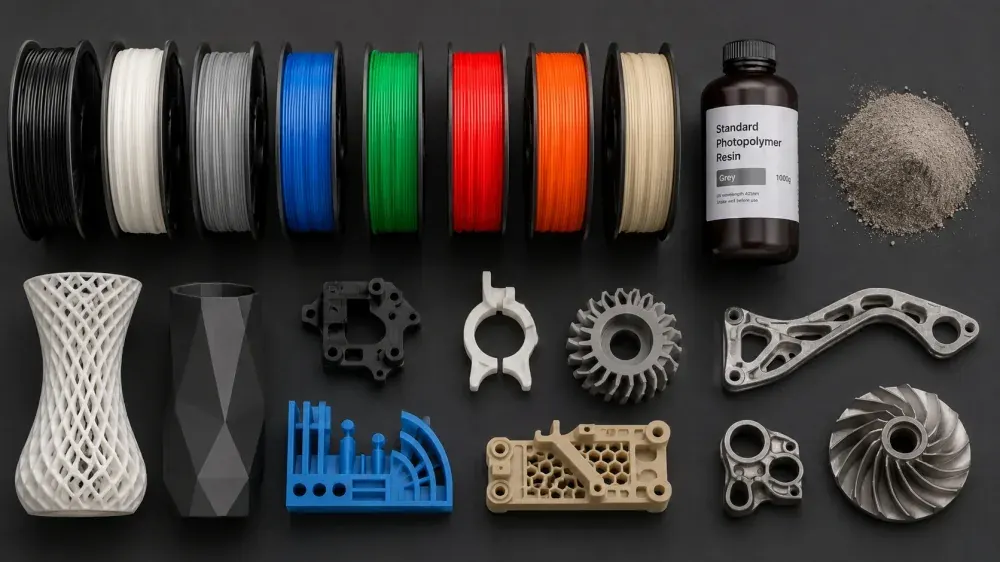
3D printing materials fall into four main groups, defined by the technology that processes them:
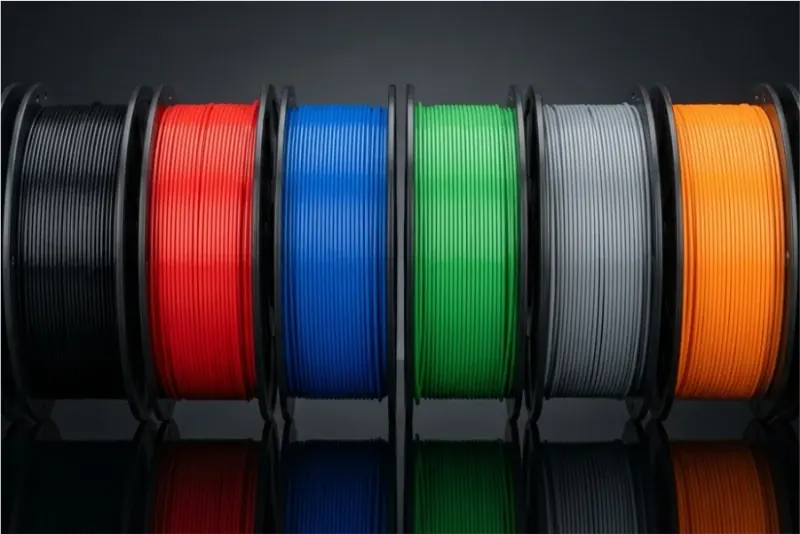
- Thermoplastic filaments – used by FDM/FFF printers (the most common type). Examples: PLA, ABS+, PETG, TPU, nylon and composite filaments.
- Photopolymer resins – used by SLA, DLP and MSLA printers for high-detail parts. Examples: standard, tough, flexible, castable and dental resins.
- Powders – used by SLS and MJF printers for strong, support-free parts. Examples: nylon (PA12, PA11) and TPU powder.
- Metals – used by DMLS, SLM and binder-jetting systems for end-use industrial parts. Examples: stainless steel, titanium, aluminium and Inconel.
A fifth, fast-growing group covers specialist and emerging materials such as ceramics, concrete for construction, chocolate and dough for food printing, and bio-inks for medical research.
Why the Material Depends on the Printing Technology
There is no single “3D printer material” because there is no single 3D printer. Each printing process melts, cures, fuses or binds a material in a different way, so the materials are not interchangeable between machine types. A filament printer cannot use resin, and a resin printer cannot use metal powder.
Understanding this is the key to choosing correctly: first identify your printing technology, then choose a material that is compatible with it and suited to your end use. Below, we cover each material family in turn.
Thermoplastic Filaments (FDM / FFF 3D Printers)
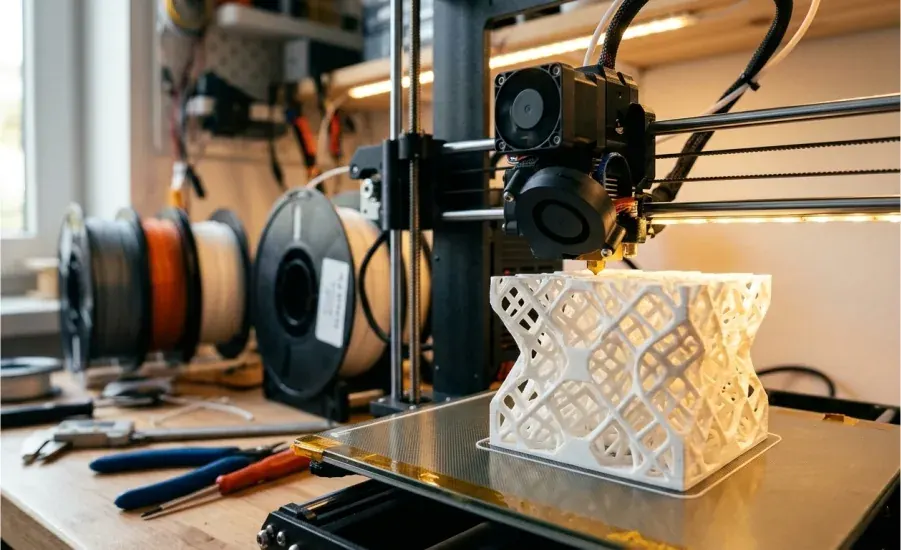
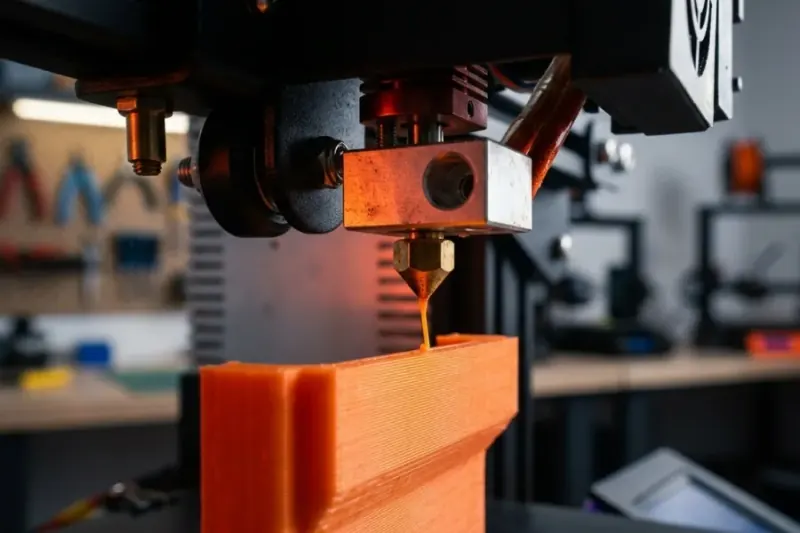
Fused Deposition Modelling (FDM), also called Fused Filament Fabrication (FFF), is the most widely used 3D printing process. It melts a spool of thermoplastic filament and deposits it layer by layer to build a part. Filament is the material category most people picture when they think of 3D printing, and it offers the broadest choice of any technology.
PLA (Polylactic Acid)
PLA is the most popular filament for beginners and general-purpose printing. It is easy to print, works at lower temperatures, and does not require a heated bed, which makes it ideal for entry-level machines. Because it is derived from renewable sources such as corn starch and sugarcane, PLA is biodegradable and one of the more environmentally friendly options. It prints with low warping and minimal odour, but it is not the strongest material and softens in heat, so it is best kept to prototypes, decorative items and models rather than functional or outdoor parts.
ABS+ (Acrylonitrile Butadiene Styrene)
ABS+ is stronger, tougher and more heat-resistant than PLA, but more demanding to print. It needs higher temperatures and a heated bed to prevent warping, and ideally an enclosed printer. ABS is widely used for functional parts, automotive components and items that must withstand mechanical stress or higher temperatures. Properly treated or painted, it also performs well for outdoor sculptures and display props. It is not biodegradable and can emit fumes while printing, so good ventilation is important.
PETG (Polyethylene Terephthalate Glycol)
PETG is an excellent middle ground, combining much of the ease of PLA with strength and durability closer to ABS. It produces robust, slightly flexible parts, is food-safe in many formulations, and does not emit harmful fumes. The main caveat is that PETG is hygroscopic – it absorbs moisture from the air – which can cause stringing and weak prints, so dry storage and a filament dryer are recommended.
TPU and TPE (Flexible Filaments)
Thermoplastic Polyurethane (TPU) and Thermoplastic Elastomer (TPE) are rubber-like, flexible filaments. They bend, stretch and absorb impact, making them ideal for phone cases, gaskets, seals, wearables and vibration dampers. Flexible filaments print more slowly and need careful extruder setup, but no other material delivers the same elasticity.
Nylon (Polyamide / PA)
Nylon is a tough, wear-resistant engineering filament with excellent durability and a degree of natural flexibility. It is well suited to functional parts such as gears, hinges, brackets and living joints. Nylon is highly hygroscopic and must be kept dry to print well, and it usually requires higher temperatures and an enclosed printer.
Polycarbonate (PC)
Polycarbonate is one of the strongest and most heat-resistant consumer filaments, with high impact strength and good optical clarity. It is used for demanding functional parts, protective components and applications exposed to heat. PC requires high print temperatures and an enclosed, well-controlled printer, making it a more advanced material.
ASA (Acrylonitrile Styrene Acrylate)
ASA has properties similar to ABS but with far better UV and weather resistance, so it holds colour and strength outdoors. It is a strong choice for outdoor fixtures, automotive exterior parts and any component that will face sunlight and the elements.
Composite Filaments (Carbon Fibre, Glass Fibre, Wood and Metal Fill)
Composite filaments blend a base polymer with reinforcing or decorative particles. Carbon-fibre and glass-fibre filaments add stiffness and strength for lightweight engineering parts, while wood-fill, metal-fill and stone-fill filaments create distinctive finishes and textures for decorative work. Abrasive composites such as carbon fibre require a hardened steel nozzle to avoid wear.
Support Materials (PVA and HIPS)
Some prints need dissolvable support structures. PVA dissolves in water and pairs well with PLA, while HIPS dissolves in limonene and pairs with ABS. These are used in dual-extrusion printing to support complex geometries and overhangs that are then washed away.
High-Performance Polymers (PEEK and PEI / ULTEM)
PEEK and PEI (ULTEM) are advanced engineering polymers with outstanding heat resistance, chemical resistance and strength. They are used in aerospace, medical and demanding industrial applications, and require specialist high-temperature printers, so they sit at the professional and industrial end of the market.
Signage-Grade Filaments: HFPC and PMMA
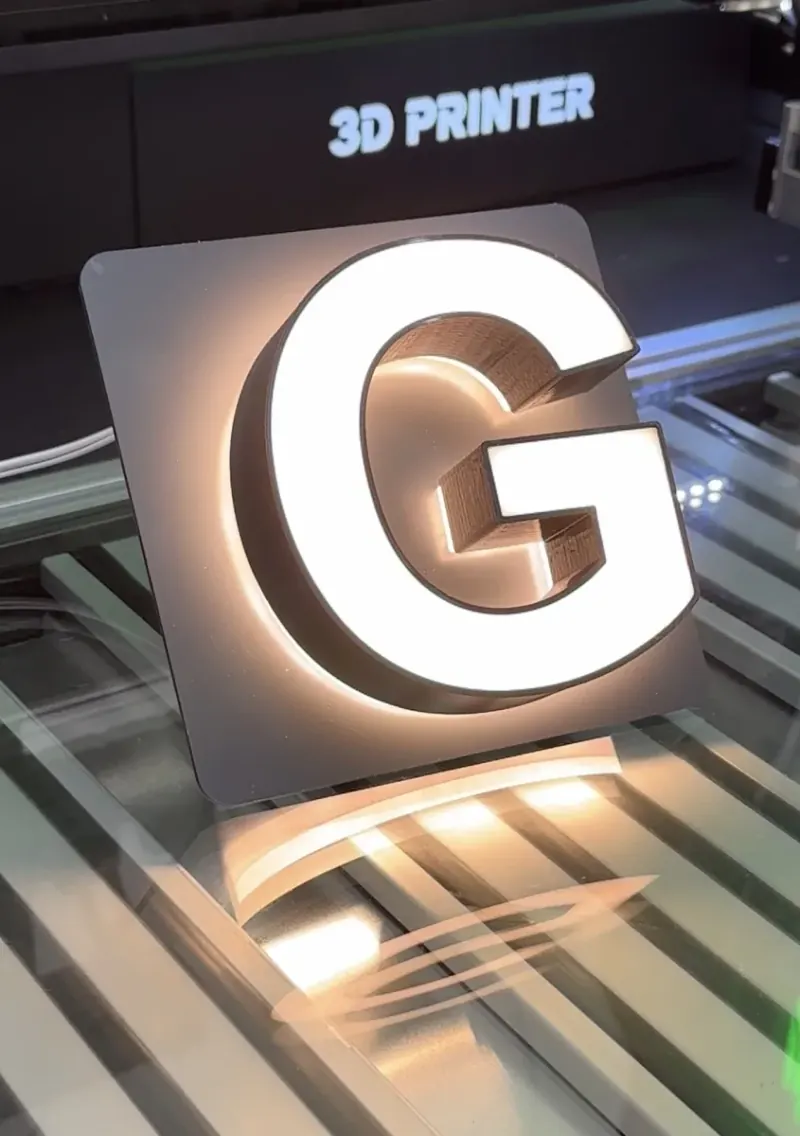
For illuminated signage and channel letters, standard hobby filaments are not enough – the material must transmit light evenly and survive years outdoors. Purpose-built signage filaments such as HFPC (High Flexible Polymer Composite) are engineered for exactly this. HFPC is built from modified polycarbonate and PETG with functional additives, giving it excellent optical clarity and light diffusion, strong adhesion with liquid acrylic and standard signage adhesives, and reliable performance across a wide temperature range of roughly -40°C to 65°C with strong UV and oxidation resistance. You can see SG 3D Printers’ full HFPC and signage filament range here.
Common FDM Filament Comparison
| Filament | Strength & Durability | Print Difficulty | Heated Bed | Key Strength | Best For |
|---|---|---|---|---|---|
| PLA | Low–Medium | Easy | Optional | Easy to print, eco-friendly | Prototypes, models, décor |
| ABS+ | High | Hard | Required | Heat & impact resistance | Functional & automotive parts |
| PETG | Medium–High | Medium | Recommended | Strong, food-safe, semi-flexible | Everyday durable parts |
| TPU / TPE | Flexible | Medium | Optional | Elasticity & impact absorption | Flexible, rubber-like parts |
| Nylon (PA) | High | Hard | Required | Toughness & wear resistance | Gears, hinges, mechanical parts |
| Polycarbonate | Very High | Hard | Required | Strength & heat resistance | Demanding functional parts |
| ASA | High | Medium–Hard | Required | UV & weather resistance | Outdoor parts |
| HFPC | High (signage) | Medium | Required | Light diffusion & outdoor durability | 3D letters & signage |
Photopolymer Resins (SLA / DLP / MSLA 3D Printers)
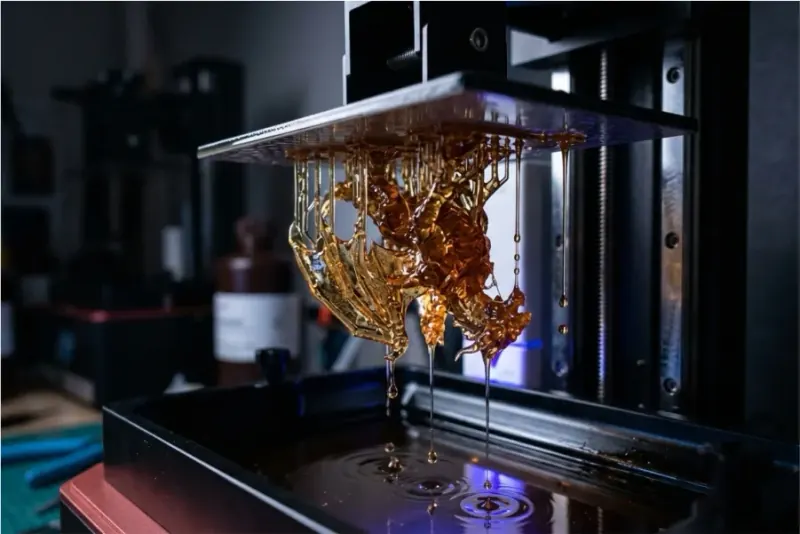
Resin printers use vat photopolymerisation – a liquid resin is cured layer by layer with UV light (SLA uses a laser; DLP and MSLA use a screen or projector). Resin delivers far higher detail and smoother surfaces than filament, which is why it dominates miniatures, jewellery, dental and other precision applications. The trade-offs are messier handling, the need for post-curing, and parts that are generally more brittle unless a specialist resin is used.
Resin is sold by formulation rather than by base polymer, and the main types are:
- Standard resin – high detail and smooth finish for models, miniatures and visual prototypes.
- Tough / durable resin – ABS-like or PP-like properties for functional parts that must resist impact.
- Flexible / elastic resin – rubber-like parts, grips and cushioning.
- Castable resin – burns out cleanly for investment casting in jewellery and dentistry.
- Dental and biocompatible resin – certified for medical and dental use such as surgical guides and aligners.
- High-temperature resin – withstands heat for moulds, tooling and engineering tests.
- Water-washable resin – simplifies cleaning by rinsing in water rather than alcohol.
Powders (SLS and MJF 3D Printers)
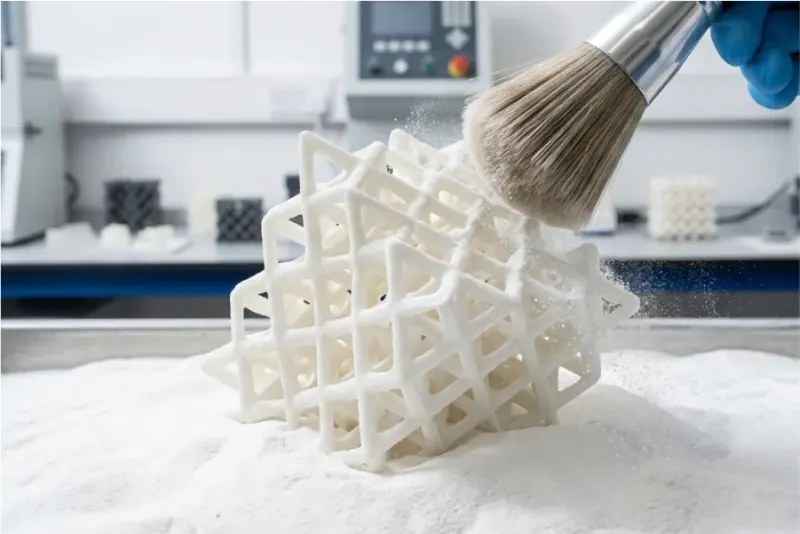
Selective Laser Sintering (SLS) and Multi Jet Fusion (MJF) build parts by fusing fine polymer powder. Because the surrounding loose powder supports the part as it prints, these processes need no support structures and can produce complex, interlocking and fully functional parts, which is why they are popular for low-volume production. Common powder materials include:
- Nylon PA12 – the workhorse SLS powder, strong, durable and versatile.
- Nylon PA11 – more ductile and impact-resistant, and partly bio-based.
- Glass-filled nylon (PA-GF) – added stiffness and heat resistance for demanding parts.
- TPU powder – flexible, durable parts such as lattices, padding and footwear components.
- Polypropylene (PP) – chemically resistant, weldable parts, commonly run on MJF systems.
Metals (DMLS / SLM / Binder Jetting)
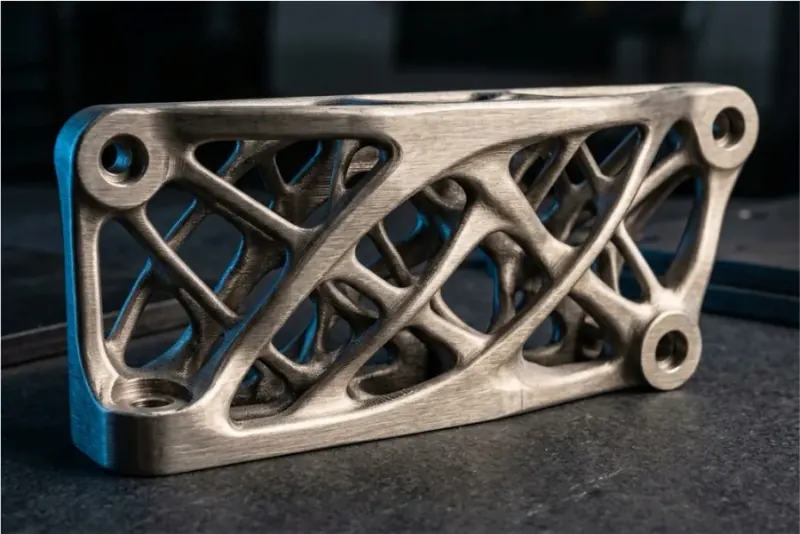
Metal 3D printing produces fully functional, end-use industrial parts. Direct Metal Laser Sintering (DMLS) and Selective Laser Melting (SLM) fuse metal powder with a high-powered laser, while binder jetting glues metal powder before sintering it solid. These are industrial processes used in aerospace, motorsport, medical implants and tooling. Common metals include:
- Stainless steel – strong, corrosion-resistant and cost-effective for tooling and functional parts.
- Titanium (Ti6Al4V) — an exceptional strength-to-weight ratio and biocompatibility, used in aerospace and medical implants.
- Aluminium (AlSi10Mg) – lightweight with good thermal properties, ideal for automotive and aerospace.
- Cobalt-chrome – hard, wear-resistant and biocompatible, used in dental and medical parts.
- Nickel superalloys (Inconel) – extreme heat and corrosion resistance for turbines and exhausts.
- Tool steel – high hardness for moulds, dies and cutting tools.
Specialist and Emerging 3D Printing Materials
Beyond the mainstream families, 3D printing now reaches into materials that were impossible only a few years ago:
- Ceramics – alumina and zirconia for heat-resistant, electrically insulating and biomedical parts.
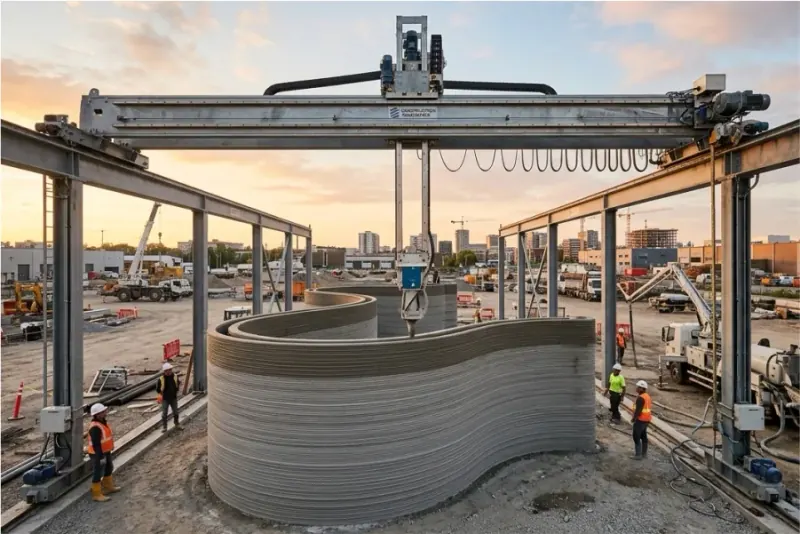
- Concrete – large-scale construction printing of walls and architectural structures.
- Food – chocolate, dough and purees printed for confectionery and culinary presentation.
- Bio-inks – cells and hydrogels printed in medical research toward tissue engineering.
- Sand – binder-jetted moulds and cores for traditional metal casting.
- Sustainable and recycled materials – recycled PLA, PETG and other eco-focused filaments.
How to Choose the Right 3D Printing Material

With so many options, the right material comes down to matching properties to your application. Work through these questions:
- What is the end use? A display model, a load-bearing functional part, and an outdoor sign all demand very different materials.
- How much strength and heat resistance does it need? PLA is fine for décor; ABS+, nylon, PC or metal are better for stress and heat.
- Does it need to flex? Choose TPU, TPE or a flexible resin.
- How fine is the detail? Resin wins on intricate detail; filament is better for larger, sturdier parts.
- Will it live outdoors? Prioritise UV and weather resistance – ASA, polycarbonate, or a signage-grade material such as HFPC.
- Does it need to be food-safe or biocompatible? Use certified PETG, specific resins or appropriate metals.
- What is your budget and printer capability? Advanced materials like PEEK or metal need specialist, higher-cost machines.

Best Materials for Signage and 3D Letters
Signage has its own set of priorities: even light diffusion, long-term outdoor durability, dimensional accuracy and easy assembly. General-purpose filaments rarely tick every box, which is why dedicated signage materials and machines exist.
This is the core focus of SG 3D Printers. Our Channel Letters 3D Printers – including the SG-S 3D Ultra and the next-generation SG-L2S Pro – are built specifically to produce illuminated 3D letters, with options for 3D-printed faces, liquid and sheet acrylic faces, and infinity-mirror effects. Paired with our purpose-engineered HFPC filament, which combines the optical clarity of acrylic with the durability of polycarbonate and PETG, they let sign makers and visual communication companies produce bright, weatherproof letters that last for years outdoors.
Our machines are assembled in the UK with local support, spare parts and on-site training. The materials and hardware are designed to work together from the start.
If you produce signage and want materials matched to professional, automated equipment, explore our 3D printers and filaments or get in touch with our team.
Frequently Asked Questions
What is the most common 3D printing material?
PLA (Polylactic Acid) is the most common 3D printing material. It is an affordable, easy-to-print, plant-based thermoplastic filament used widely for prototypes, models and general-purpose printing on FDM machines.
What is the strongest 3D printing material?
Among consumer filaments, polycarbonate (PC) and PEEK are the strongest, offering high impact and heat resistance. Across all 3D printing, metals such as titanium and stainless steel are the strongest materials and are used for industrial and aerospace parts.
Can 3D printers print with metal?
Yes. Industrial 3D printers using DMLS, SLM or binder jetting can print metals including stainless steel, titanium, aluminium, cobalt-chrome and Inconel. These are specialist machines used for end-use functional and engineering parts rather than typical desktop printers.
What is the best 3D printing material for outdoor use?
For general outdoor parts, ASA and polycarbonate offer the best UV and weather resistance. For outdoor illuminated signage specifically, a purpose-built material such as HFPC is ideal because it combines weatherproof durability with the optical clarity needed for even light diffusion.
Is PLA or PETG better?
It depends on the application. PLA is easier to print and best for décor and prototypes, while PETG is stronger, more durable, slightly flexible and often food-safe, making it the better choice for functional parts that need to withstand use and mild heat.
Can 3D printers print flexible or transparent parts?
Yes. Flexible, rubber-like parts are printed with TPU or TPE filament or flexible resin. Transparent and light-diffusing parts can be printed with clear PETG, certain resins, or signage-grade materials like HFPC, which is engineered for high light transmission.
What material is best for 3D-printed channel letters and signage?
HFPC (High Flexible Polymer Composite) is purpose-built for 3D-printed channel letters and illuminated signage. It delivers excellent light diffusion, strong adhesion with acrylic and signage adhesives, and reliable outdoor performance across a wide temperature range, making it well suited to professional sign production.
Final Thoughts
3D printers can use far more than plastic – thermoplastic filaments, liquid resins, powders, metals, ceramics, concrete and more are all in play, with the right material always determined by your printing technology and your end goal. For most users, the choice begins with the FDM filament family, while industrial and specialist applications open up resins, powders and metals.
If your goal is professional signage, the material and the machine matter equally. Purpose-built signage filaments like HFPC, run on dedicated channel-letter 3D printers, deliver results that general-purpose setups cannot match. To find the right combination for your business, browse the SG 3D Printers range or contact our team for advice.