3D Printed Channel Letters: Complete UK Guide (2026)
Published Updated
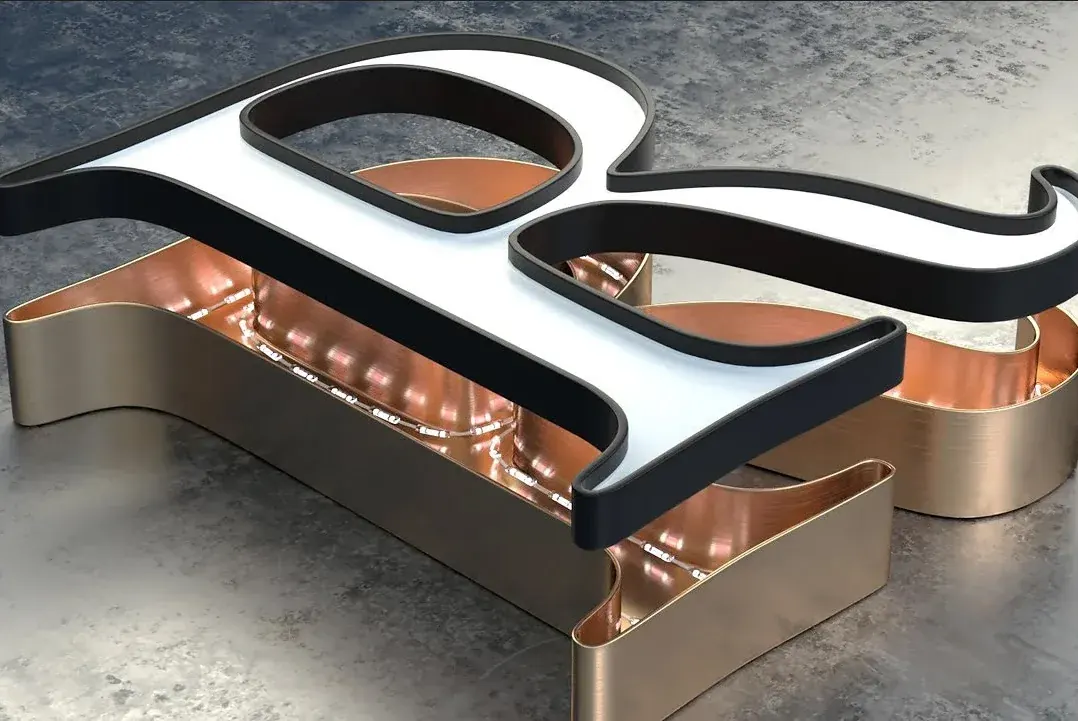
Below is a consolidated, evidence-backed report on 3D printed channel letters (illuminated dimensional signage made with additive manufacturing). I pulled industry writeups, vendor pages, case studies, forum experience, and equipment listings so you get a practical, production-oriented picture: what works, how people do it, what printers & materials are used, shortcomings and remaining gaps.
Short summary
- What it is: 3D printing channel letters means producing the bodies/returns (and sometimes faces) of illuminated channel letters using large-format FDM/FFF (and occasionally other AM) printers instead of traditional metal forming, routing, or thermoforming processes. This enables organic shapes, faster iteration and potentially lower labour costs for small/medium runs.
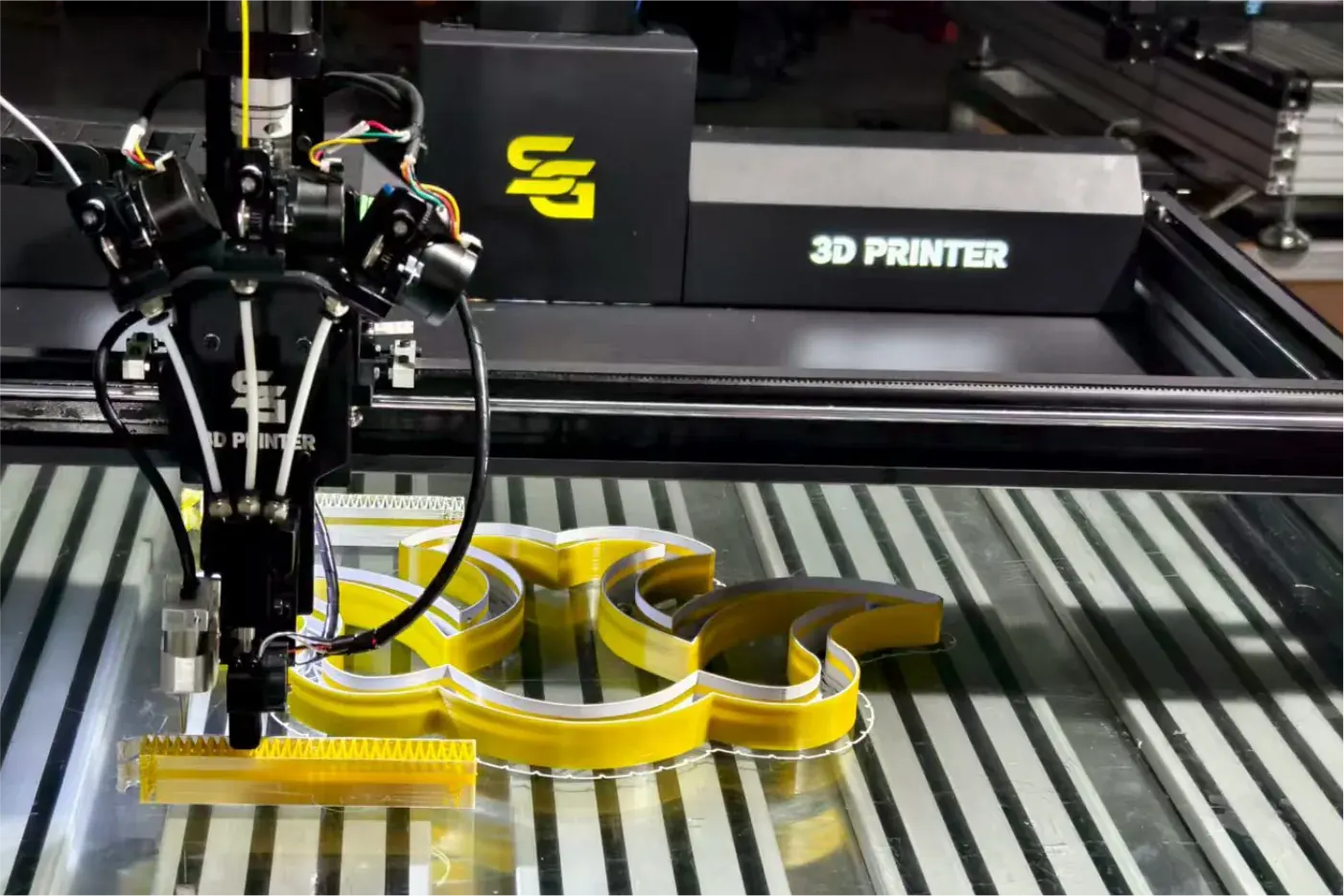
- Common printers & vendors: Large-format FDM machines targeted at signage ( SG-S 3D Ultra)
- Materials: Specialty signage filaments (often marketed as HFPC, PMMA blends, weather-resistant PLA/PETG variants) are used for optical diffusion and outdoor durability; some shops still use routed acrylic for faces and glue them to printed returns.
Why sign makers use 3D printed channel letters
- Complex shapes & customization on demand – freeform shapes, deep returns, and bespoke faces are much faster to produce with AM than metal bending and hand-forming.
- Reduced tooling & lead time – no die, no expensive metal forming tooling; you iterate in INC Slice and print.
- Labour savings – less hand-forming and finishing for complex geometries, though finishing is still required for premium looks.
- Scale & modularity – large format printers (or tiling smaller prints) can produce oversized letters and complex 3D logos previously uneconomical.
Typical production workflow (high level)
- Design – vector/3D model (Illustrator/CorelDRAW → INC Slice → 3D View → 3D Printing). Design for seams, drainage, cable access, and mounting points.
- Slicing & orientation – optimize orientation for wall thickness, layer direction to minimize visible seams on front face, and ensure internal cavities for LEDs and wiring.
- Printing – large FDM with signage filament (HFPC/PMMA/PETG variants) or standard PETG/ABS when protected; print in one piece or tile multiple sections.
- Post-processing – sanding, acetone/solvent finishing (when material allows), painting, sealing, or applying acrylic faces.
- Lighting integration – install LED strips/modules into prepared pockets, wire for power and control.
- Mounting & field install – add mounting studs, backer panels, or frames; waterproofing/gasket as needed.
(Examples and step-throughs are common in industry writeups and vendor pages.)
Printers & hardware commonly used
- Large-format FDM printers built for signage: companies like Sign Group (large beds, high throughput) have been used by sign shops to print full channel letters and signage elements.
- Signage-specific machines HFPC/PMMA printing and roll-to-roll plate types sized for channel letters. These machines emphasize bed area, nozzle temps and material compatibility for signage filaments.
- Desktop & mid-format (Flashforge AD1, etc.) are used for smaller letters or prototyping; they support materials up to ~260 °C for common signage thermoplastics.
Materials & filaments - what people actually use
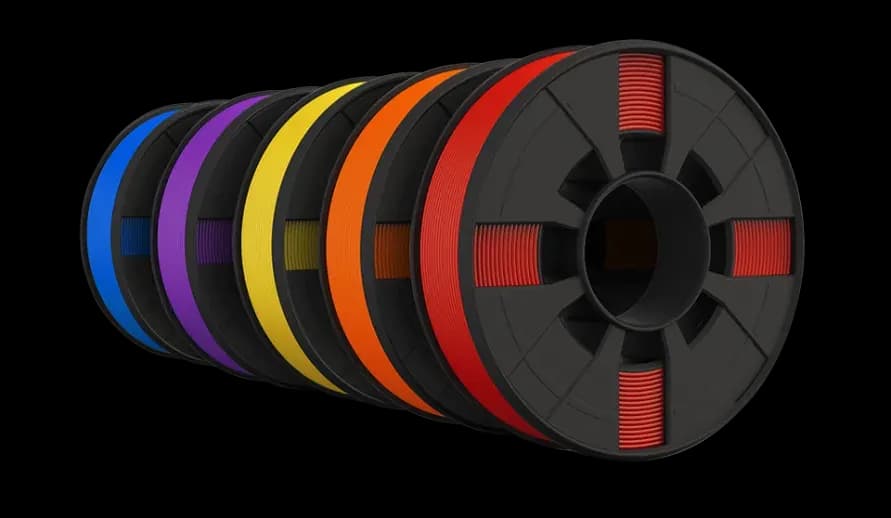
- HFPC (signage-branded filament): marketed specifically for channel letters, claims include optical diffusion, UV stabilizers, low warping and good adhesion to adhesives used in signage. This is a common choice for returns and diffusing bodies.
- PMMA / Acrylic (3D printable grades): good optical properties; printing PMMA is more demanding but provides clearer faces/diffusers. Often routed or laser-cut acrylic faces are glued to printed returns.
- PETG / ABS / modified PLA: used for non-illuminated letters or protected installations; PETG is popular for its weather resistance and ease of printing.
- Adhesives & sealants: compatibility testing needed (some filaments bond differently to sign adhesives / silicone). See vendor guidance. sg3dprinters.com
Lighting & optical considerations
- Diffusion: printed returns and diffusing faces must be engineered for even LED spread – that’s why signage filaments that claim “uniform diffusion” are sold. But measurement/validation is recommended (measure luminance uniformity). sg3dprinters.com
- LED mounting: designs normally include pockets and standoffs sized for LED strips or modules; consider serviceability (replace LEDs later).
- Power, wiring & thermal: LEDs dissipate heat; ensure cavities allow heat escape or use LEDs rated for enclosed installations. Thermal behaviour of the printed polymer in sunlight must be considered.
Advantages vs traditional processes
Pros:
- Rapid customization, organic and 3D shapes, lower tooling cost, easier iteration.
- Ability to produce smaller and thinner 3D channel letters with quality and a better finished product
Cons / trade-offs:
- Surface finish & visible layer lines – use of specific signage filaments otherwise it may require sanding, filler or additional faces (acrylic) for high-end look.
- Production speed – large, high-quality prints take time; very high volume may still favour formed metal or routed acrylic plus metal returns.
Real world examples & case studies
- Objex Unlimited and similar sign-service providers show real channel-letter projects produced via 3D printing (examples of production parts, LED integration and finishing). These examples illustrate viable workflows for commercial signage.
- Industry press: multiple writeups show how large-format printers have been adopted in signage shops and how the tech reduces lead time for complex letters.
UK / Europe Vendor Table
| Vendor | Type of Vendor (Printer / Filament / Service) | What They Offer / Speciality | Contact Info / Stock / Location |
|---|---|---|---|
| Sign Group (UK) | Printer + Filament Supplier + 3D Printing Service | They offer channel letters 3D printers + UV Curing (models like SG-S 3D Ultra, SG-S Pro Ultra) with options ~800×800 mm and 1200×1200 mm beds. They also supply HFPC (“High Flexible Polymer Composite”) filament formulated for outdoor illuminated signage and channel letters. They also offer Industrial Filament Driers. The machines are assembled in the UK and they provide full training and support | Head Office Address: 17 Burnt Oak Broadway, HA8 5LD, London, UK. Phone: +44 203 620 1605. Local support/spare parts. |
| Dimension Signs | Service Provider / Equipment Sales | Dedicated 3D printed signage (channel 3D letters, illuminated signs, 3D signage equipment for sale) as well as sign production. Based in Leicestershire. | Leicester, England. UK-wide service. Contact via their website. |
| Replik8 / PioCreat (UK stockist) | Printer / Printer + UV equipment | They sell the K8 Signage 3D Printer & UV Oven set (~800 mm), suited for LED letters and resin letters / faces. | UK stock (Replik8), check their site for current availability. Contact via their website |
| EIQS (UK) Ltd | 3D Printing Service | Offers 3D printing services (FDM, SLA etc.), many materials, reasonably sized prints, small/urgent jobs in 24-48h. Could be used for prototyping channel letters or parts of them. | Contact: +44 (0)1254 237571, Based in the UK. |
| The Filament Guy | Filament Supplier / Retailer | UK-based filament & accessories supplier. Stocks tested brands, wide range of PLA, PETG, etc. While not HFPC‐specialist, good for accessories or non-illuminated parts. | UK dispatch. Online store. Contact via their website and store. |